The Carter Blog
Carter ARTicles
Caregiving for Georgia O’Keeffe’s Red Cannas (part 3)
Jan 28, 2026
Preventive conservation vs. potential risks
My studio is in the heart of Capitol Hill in Washington, D.C. For small businesses in caretaking, such as my studio, compartmentalization is key. So is trusting the transit to professional art-moving companies under the direction of an appointed courier from the Carter, Assistant Conservator of Photography and Works on Paper Cristina D’Amico.
"Being a courier for a work of art is a responsibility that goes far beyond transport and logistics,” explains D’Amico. “From the moment an artwork leaves its home, every step is about safeguarding something irreplaceable, feeling both the weight of that duty and the profound privilege of carrying something that truly matters."
-
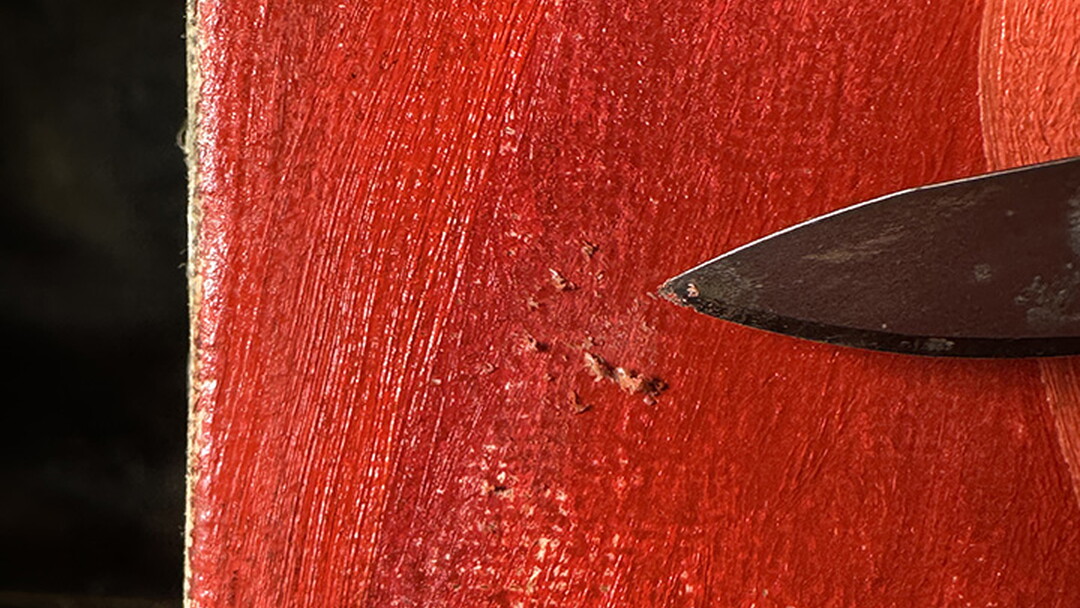
Heavy red overpaint is removed with scalpels after solvent activation to reveal areas of revealed paint “skips” in between brushwork, as well as areas of past abrasion.
-
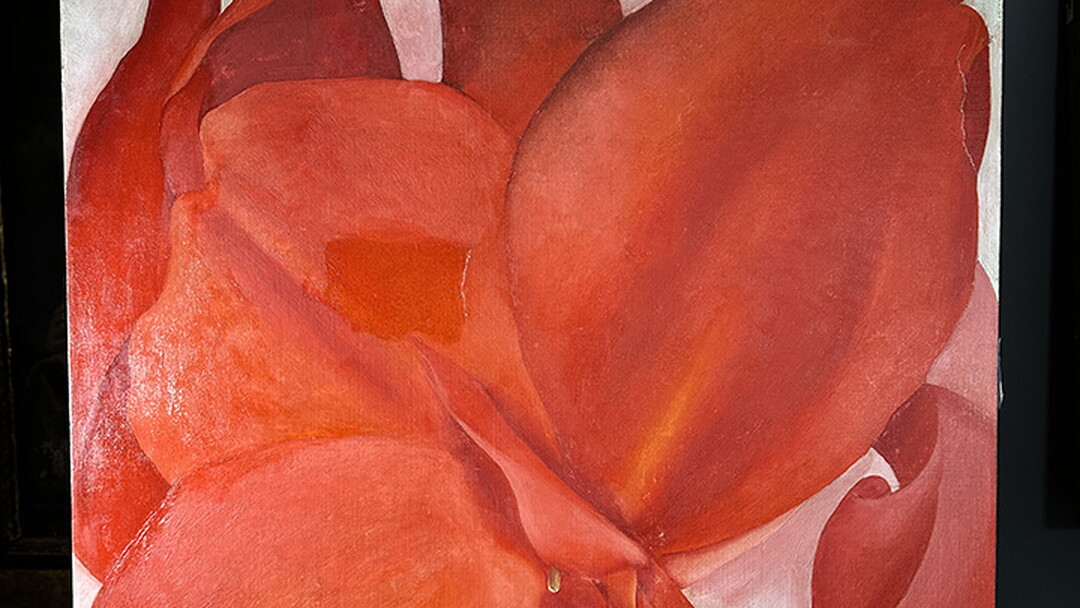
The final area of Red Cannas to be cleaned, around Georgia’s compositional changes.
-
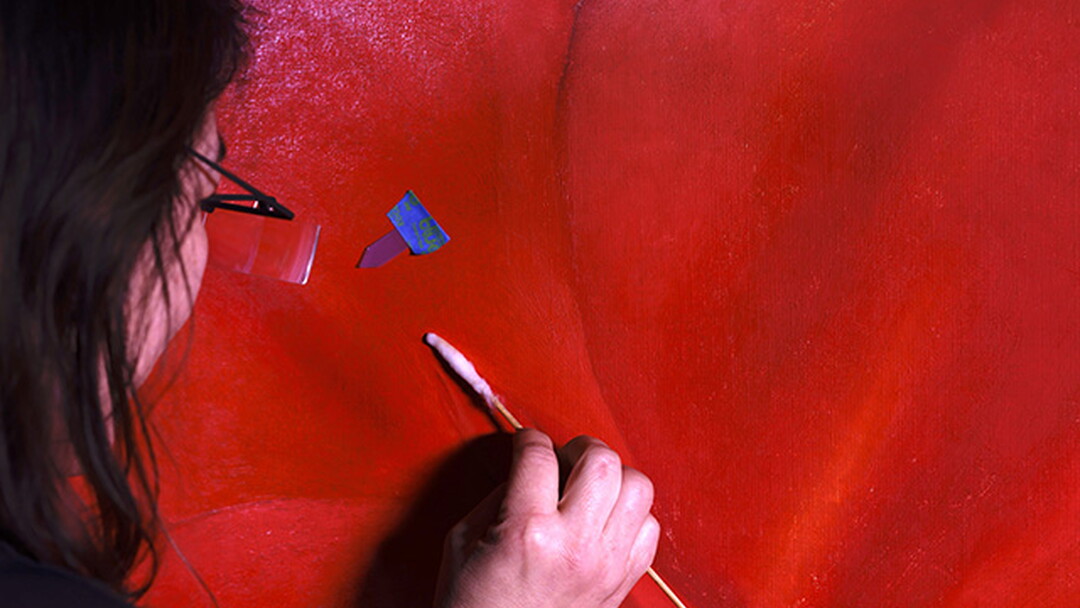
My friend and Texas-based photographer David W. Bullanday, who knew me before I began my career, came to visit from Texas for a special photoshoot.
-
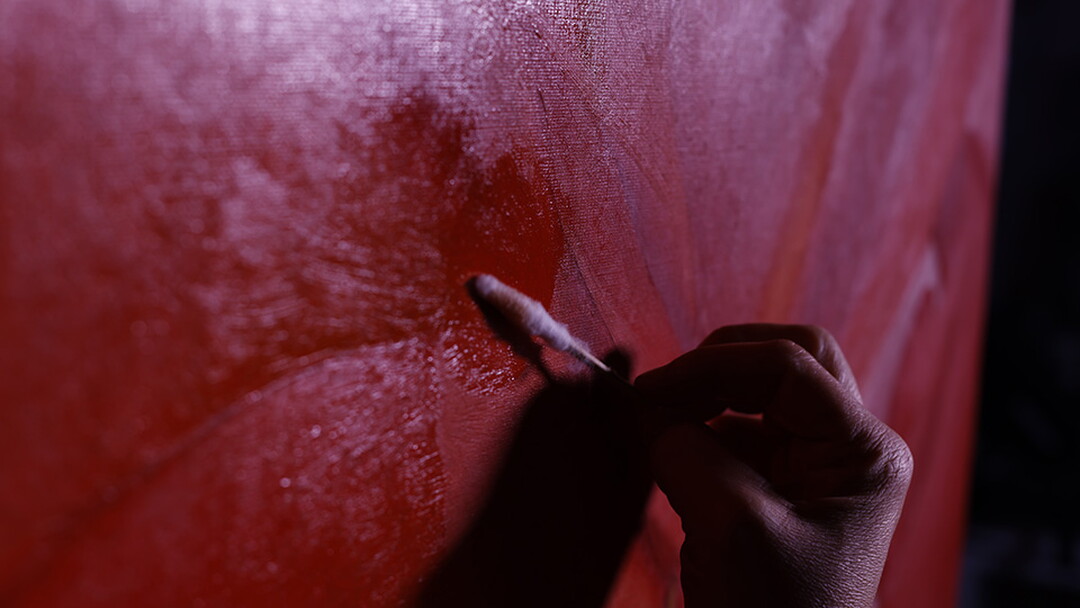
David’s work photographing ballet dancers has trained him to capture fleeting aspects that mark both the dancer and choreographer, which was another inspiration for sharing this treatment.
I was aware the painting was due for reinstallation after a long-term loan, and, due to political events, transportation around the area can be very difficult, so I wanted to ensure the artwork was out of the district before another high-profile event took place. In addition, a converging blizzard (a rarity in DC) affected the transportation of the experts coming in to review the painting before it was returned to the Carter.
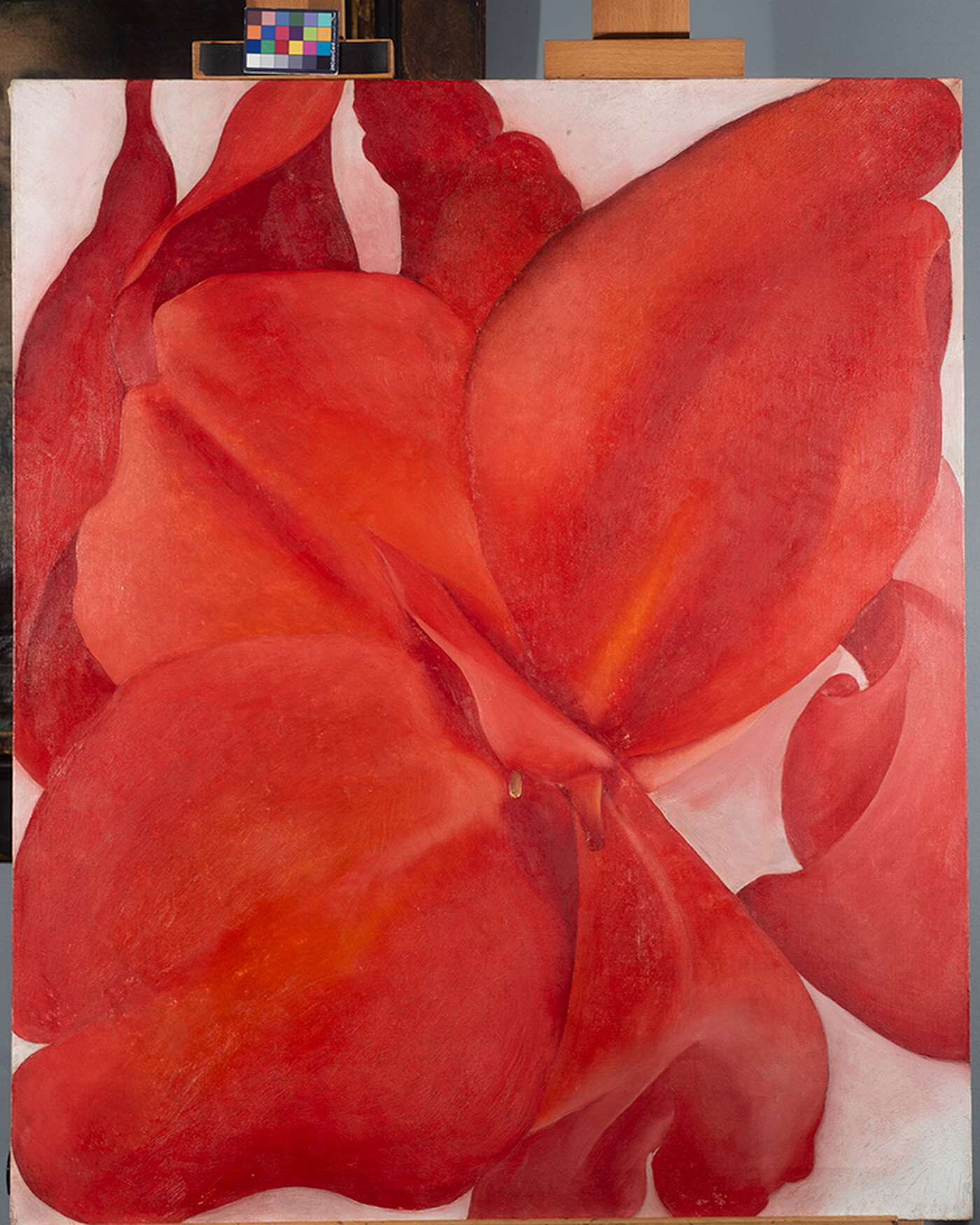
After cleaning and a customized approach to gently “varnishing” the painting, the next step is toning small areas of existing abrasion.
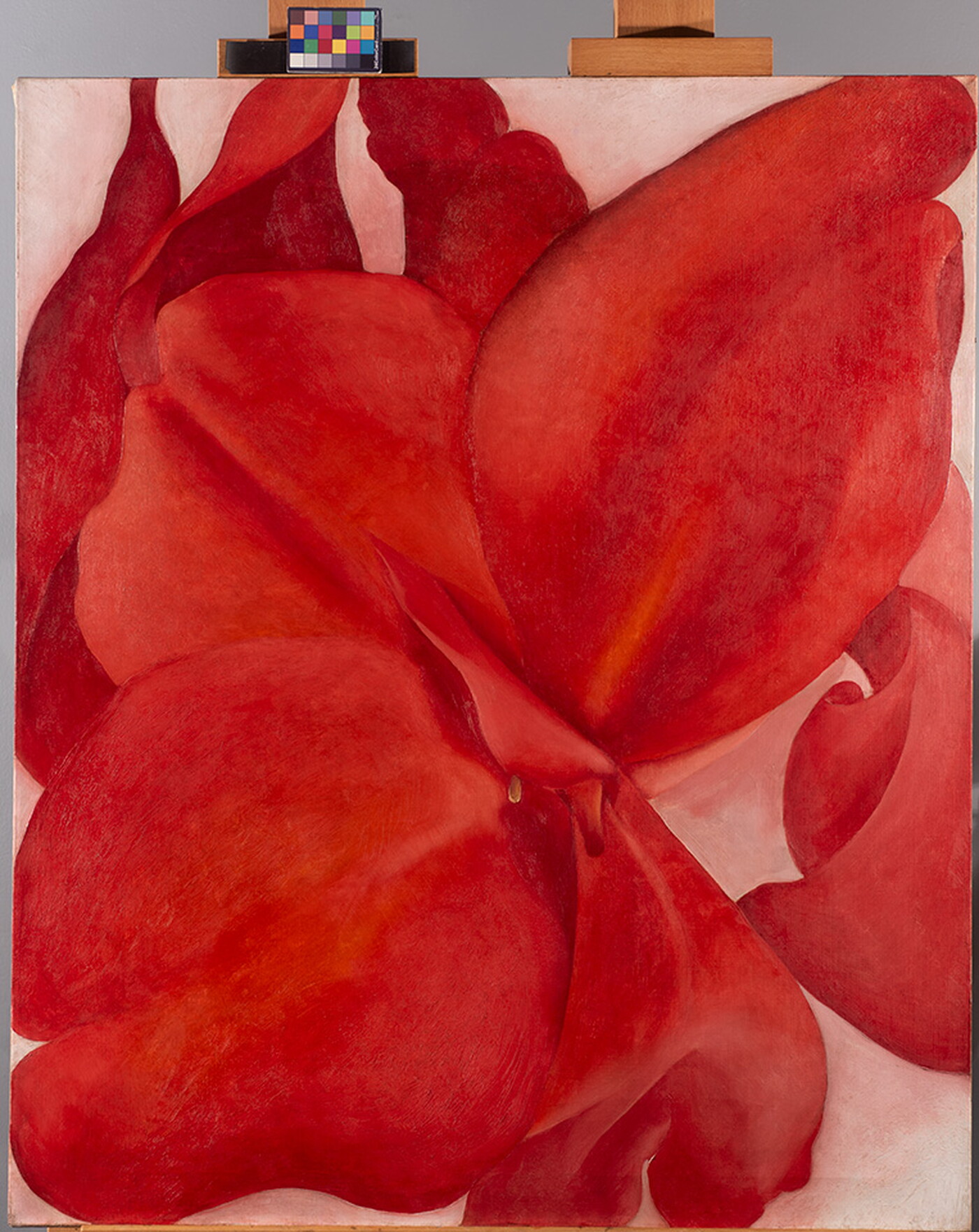
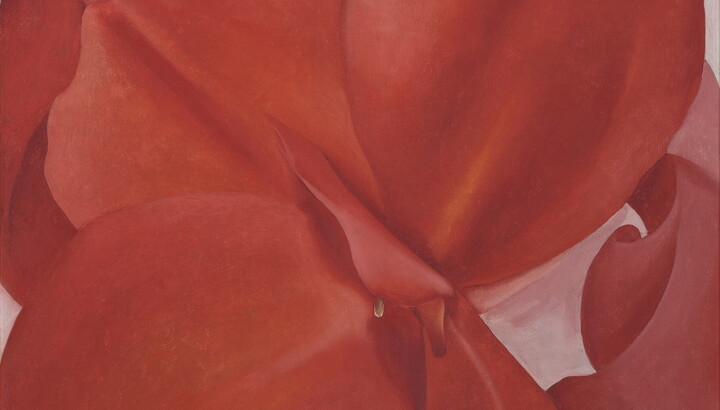
Red Cannas, after treatment.
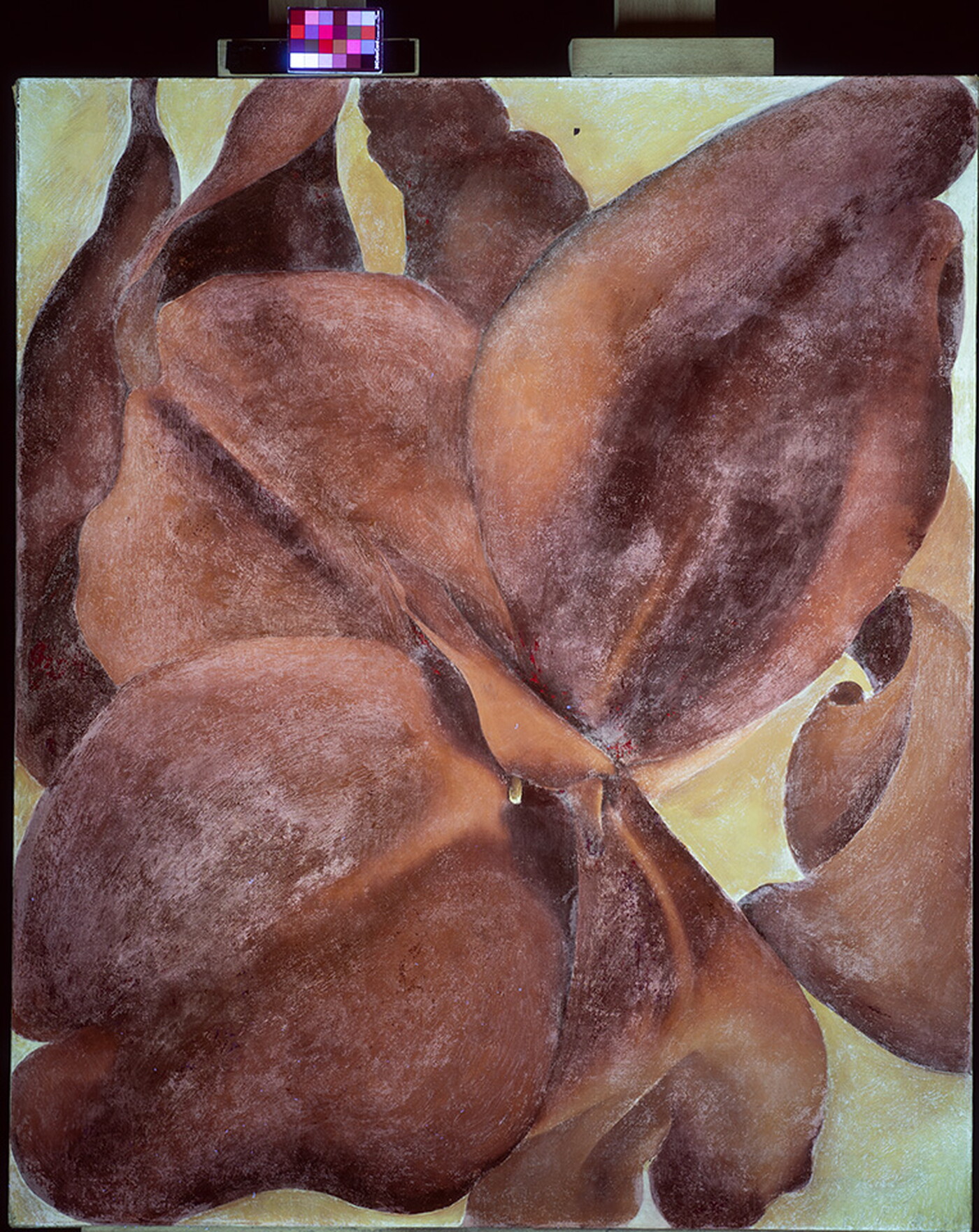
After treatment, ultraviolet induced visible autofluorescence. Comparing these photographs to before treatment (see images in part 2), the impact of my “restoration” is greatly reduced in relation to what we can learn about the painting’s response itself with this technique.
A fresher surface for familiar faces
While Red Cannas was in my studio during one of the most difficult periods of my life, it served as the most profound treatment that could have been provided to me. At the same time, the Museum was preparing to receive and re-display the painting. As mentioned in my previous blog posts, it is important to know that your work matters. When it comes to returning a painting to its museum, you want to be sure that the eyes that know the artwork best are pleased with the work you have done. It is art’s capacity to connect and heal that drives so much of the museum professions.
The Carter’s Head of Conservation, Jodie Utter, found herself in front of the conserved painting on a particularly troubling day for her. The painting reminded her that the work we do “is more than just making the painting look good. We are giving the artwork agency again. It is sublime.”
-
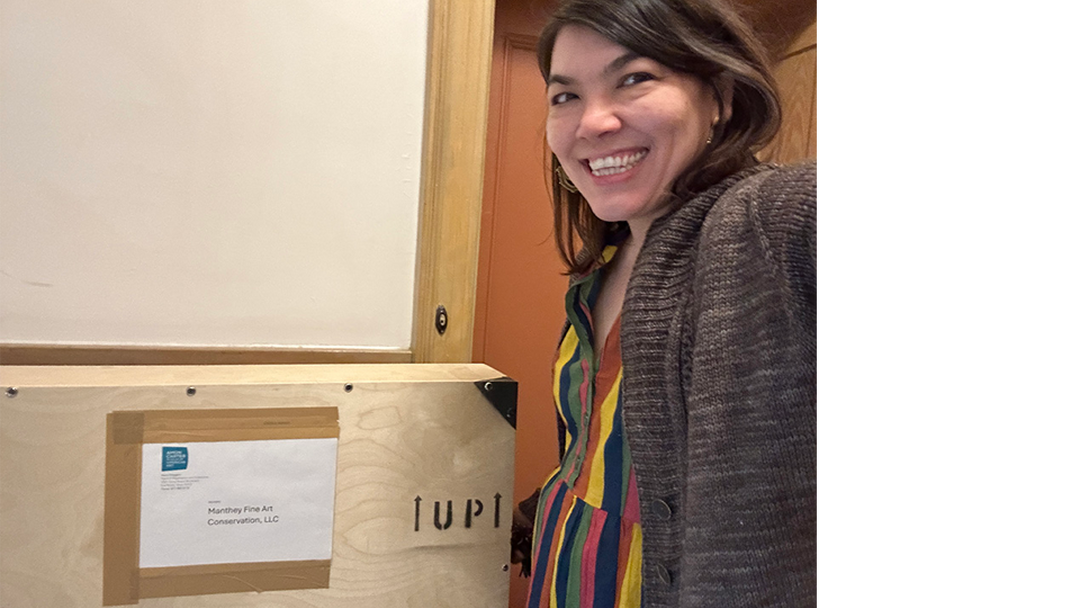
After packing up the painting, it was returned to the Carter through trusted shippers.
-
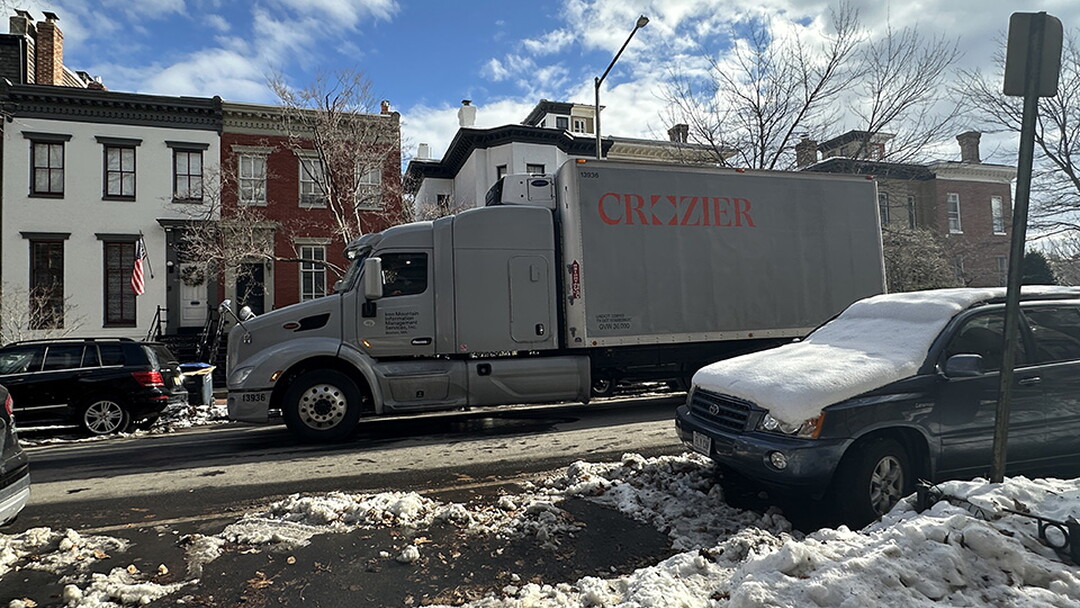
The painting was shipped out of Washington, D.C., just days prior to the 2025 inauguration, which regularly shuts down traffic in the area and increases traffic risks.
Back at the Carter, Shirley Reece-Hughes, Senior Curator of Paintings, Sculpture, and Works on Paper, said, "Seeing Red Cannas return with its surface reawakened was like meeting an old friend anew. The conservation reveals O’Keeffe’s hand with renewed clarity, reminding us how attentive care can restore not just a painting’s appearance, but our relationship to it."
There is a moment when I know that I have completed treatment to the point of it being “enough,” without running the risk of an adage that runs through our profession; often attributed to Voltaire, the phrase is, “Better is the enemy of good.” However, my own standard of a finished treatment dances between that and kaizen, the Japanese concept for small, continual improvements. The dance between the struggle to improve the overall condition of the painting, tempered with the desire for improving oneself, was best served through my fingers with the help of cotton swabs and porcupine quills.
Acknowledgments
I’m grateful to the entire Carter staff for entrusting me with the care of an icon in the collection. I have only been able to communicate with a few personally, but the care each has for the collection has been evident throughout our individual relationships, and for that, I am truly honored to be asked to represent them with this series. Thank you, especially, to Jodie Utter, Head of Conservation, for entrusting me with this task; Marci Driggers, Registrar, for carefully planning the movement of the artwork; and Michelle Padilla, for helping me translate the tangible properties of caretaking into the intangible digital for you.
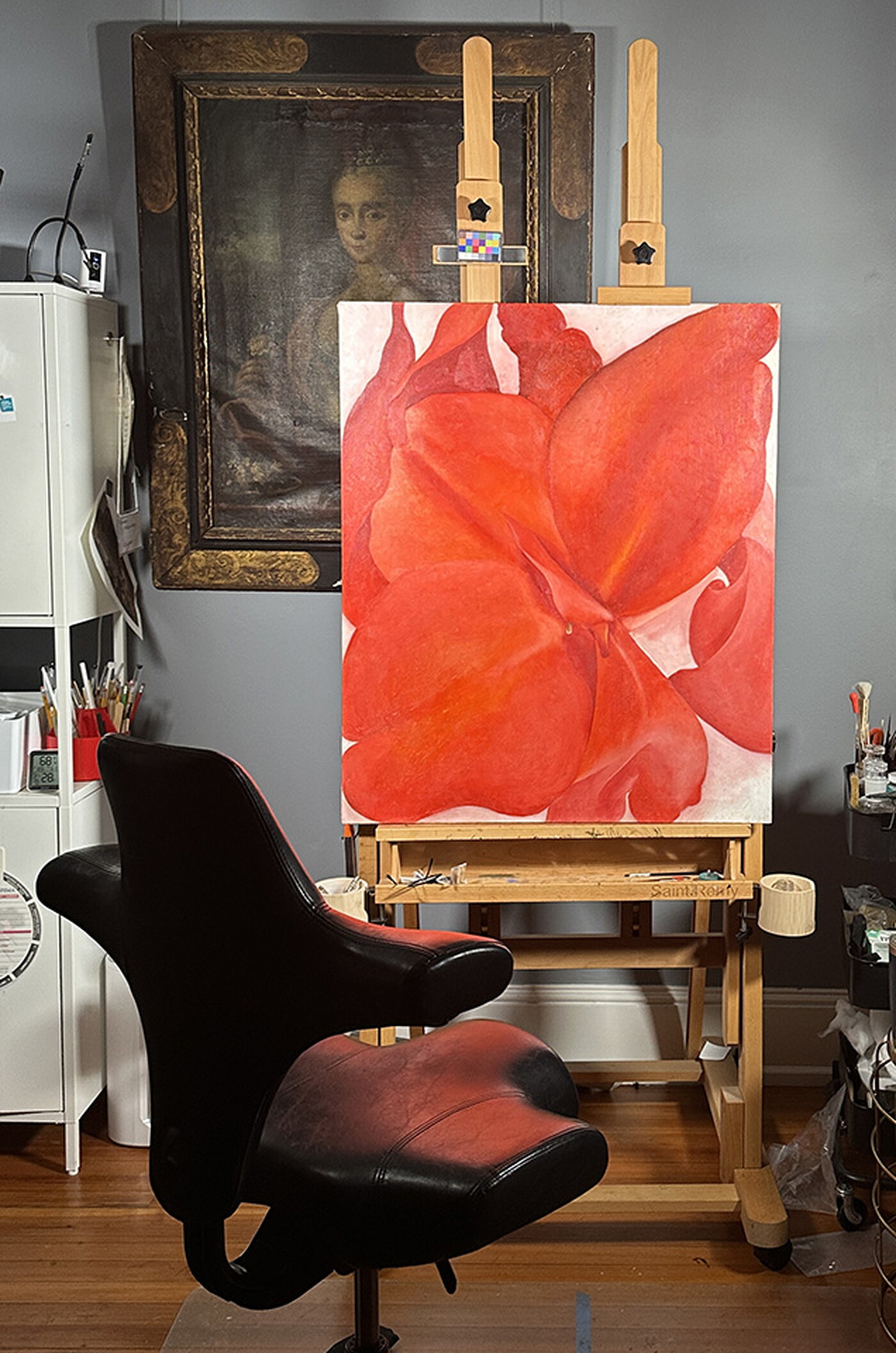
Treating a painting requires a conservator to regularly step back for a “public perspective,” and take the next step of relating all it has taught you in turn.
Watch Gwen Manthey's January 8, 2026, Exhibition Talk about her work on Red Cannas.