The Carter Blog
Carter ARTicles
Caregiving for Georgia O’Keeffe’s Red Cannas (part 2)
Jan 07, 2026
Don't miss parts 1 and 3 of Gwen Manthey's Caregiving for Georgia O'Keeffe's Red Cannas.
When first impressions are wrong
A private conservator will rarely give an estimate to treat a painting without first examining it in person because they want to respond to every aspect of the original artwork, front and back. In the case of Red Cannas, I had not been able to look at the back of the painting.
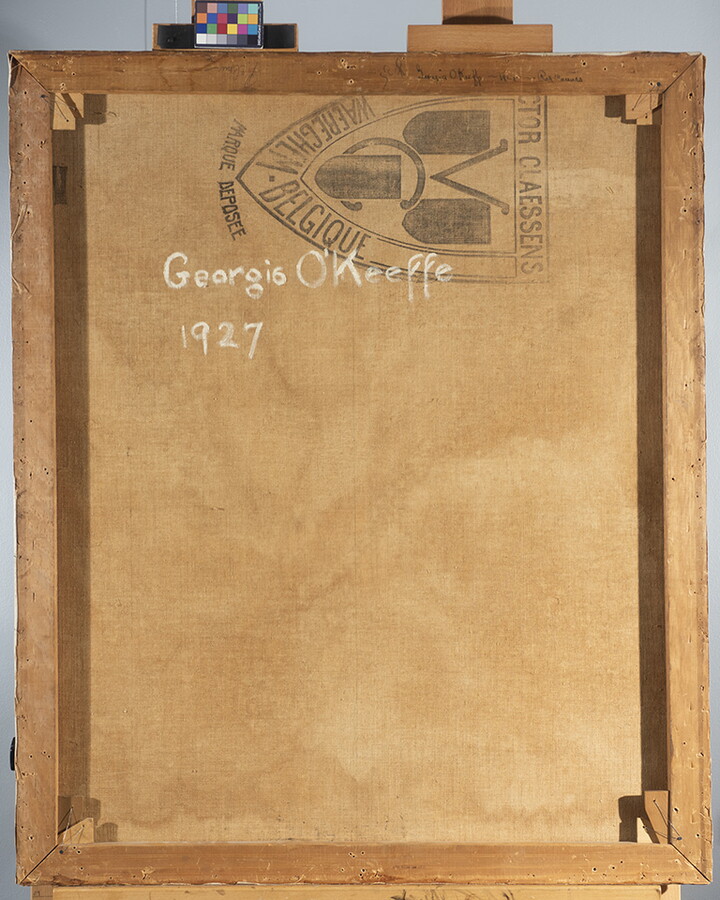
The reverse of Red Cannas, and the first photographs of the Claessens stamp used in canvases preferred by Georgia O’Keeffe. Confusing matters slightly were additional inscriptions on the reverse, suggesting the composition was rotated at some point during its development.
Once the work was in my studio, I allowed it to become conditioned in the space for a full day, then, with assistance, I uncrated it and stored the frame for the duration of the treatment. As soon as I removed the backing board and saw the reverse, I gasped! In the comprehensive catalogue raisonné of Georgia O’Keeffe’s paintings is a notation about a canvas stamp on the reverse of the painting, and there it was! However, this had never been verified with a photograph and dovetailed with the research of the artist’s materials by other experts.
I was definitely wrong about the painting being lined [see part 1]; it had not been. The reason the painting appeared so flat when studied was on the very surface of the painting itself: the varnish layer.
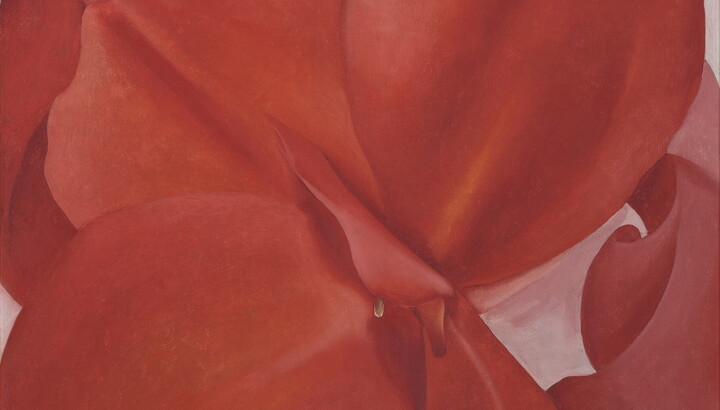
Technical imaging
One of the special services my studio provides is technical imaging and a facilitated discussion on how an artwork responds to calibrated imaging to aid in research and provenance studies. Some of these imaging services include reflected ultraviolet and ultraviolet autofluorescence (most often seen in crime scene investigation reenactments), and infrared techniques (which can see through some paint layers). High-resolution imaging (visible to the human eye), taken throughout the course of treatment, is standard with my practice , as dictated by the ethics that guide my profession.
-
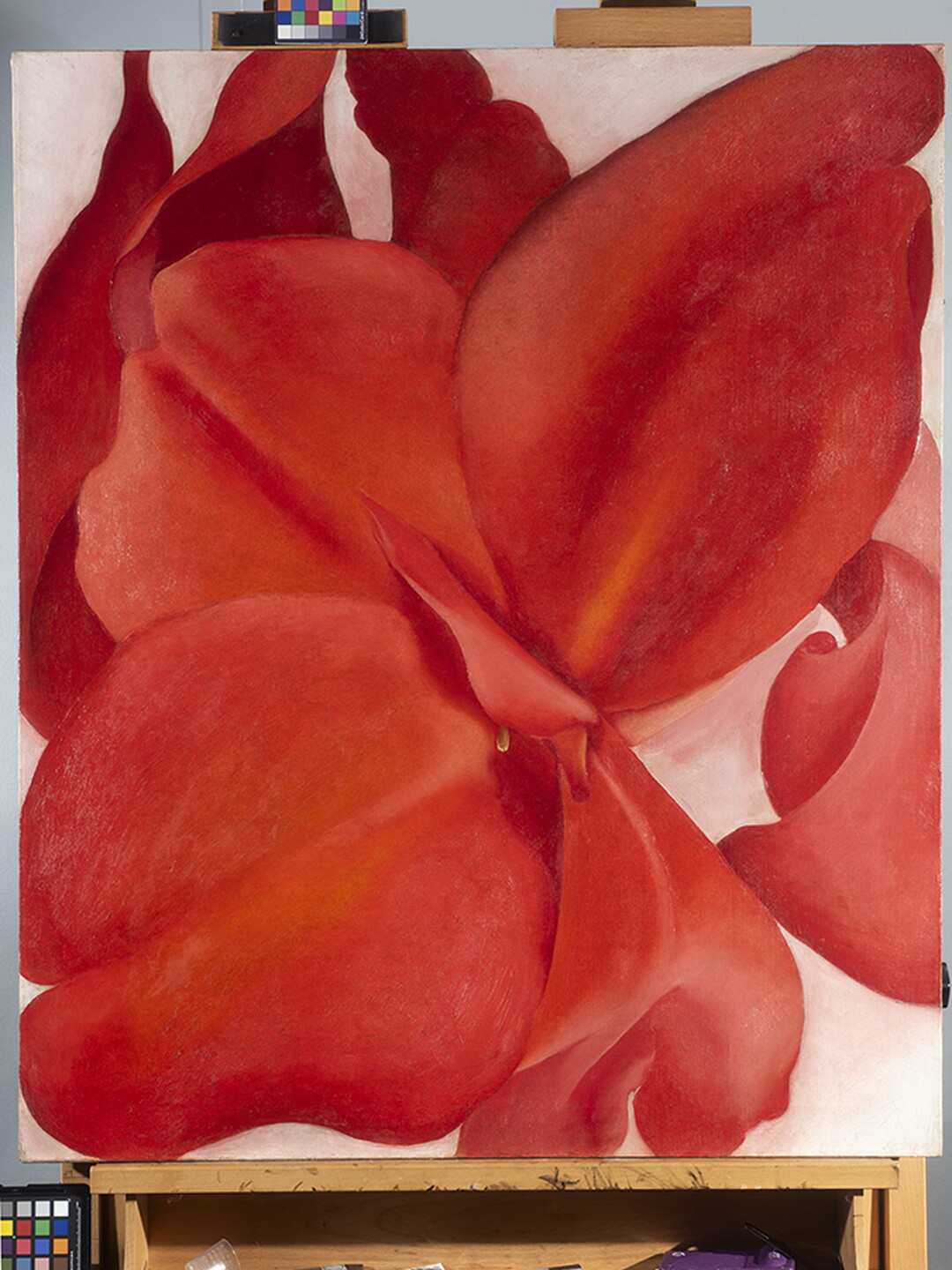
Before treatment photograph of Red Cannas in normal/reflected light.
-

Before treatment photograph of Red Cannas in ultraviolet-induced visible luminescence. With this technique, varnish films, restoration paints, and some other paints are activated to create a visual contrast.
The conservation imaging taken throughout my treatment isn’t the only type of imaging that centers the artwork; the Carter’s photographers—Paul Leicht and Steve Watson—aided throughout this project by lending their space to me throughout the survey and facilitating infrared imaging of other works in their collection. For Red Cannas, the photographers embarked on even deeper topographical imaging, a technique known as photogrammetry, that will help the Museum’s registrar, Marci Driggers, and head conservator, Jodie Utter, document and track other cracks and anomalies that remained after my conservation treatment.
Treatment
After removing a light amount of surface dust, I approached the complicated step of varnish removal on the painting’s highly textured surface, which I carried out in a slow-moving battle between tiny hand-rolled cotton swabs, micro-scalpels, and porcupine quills. The canvas physically relaxed as I picked away the varnish, and the textural brushwork, called impasto, began to emerge from carefully undulating passages of vibrating pinks and red. I will discuss how the painting physically responded to treatment, as indicated through these images, during my January 8 presentation.
-
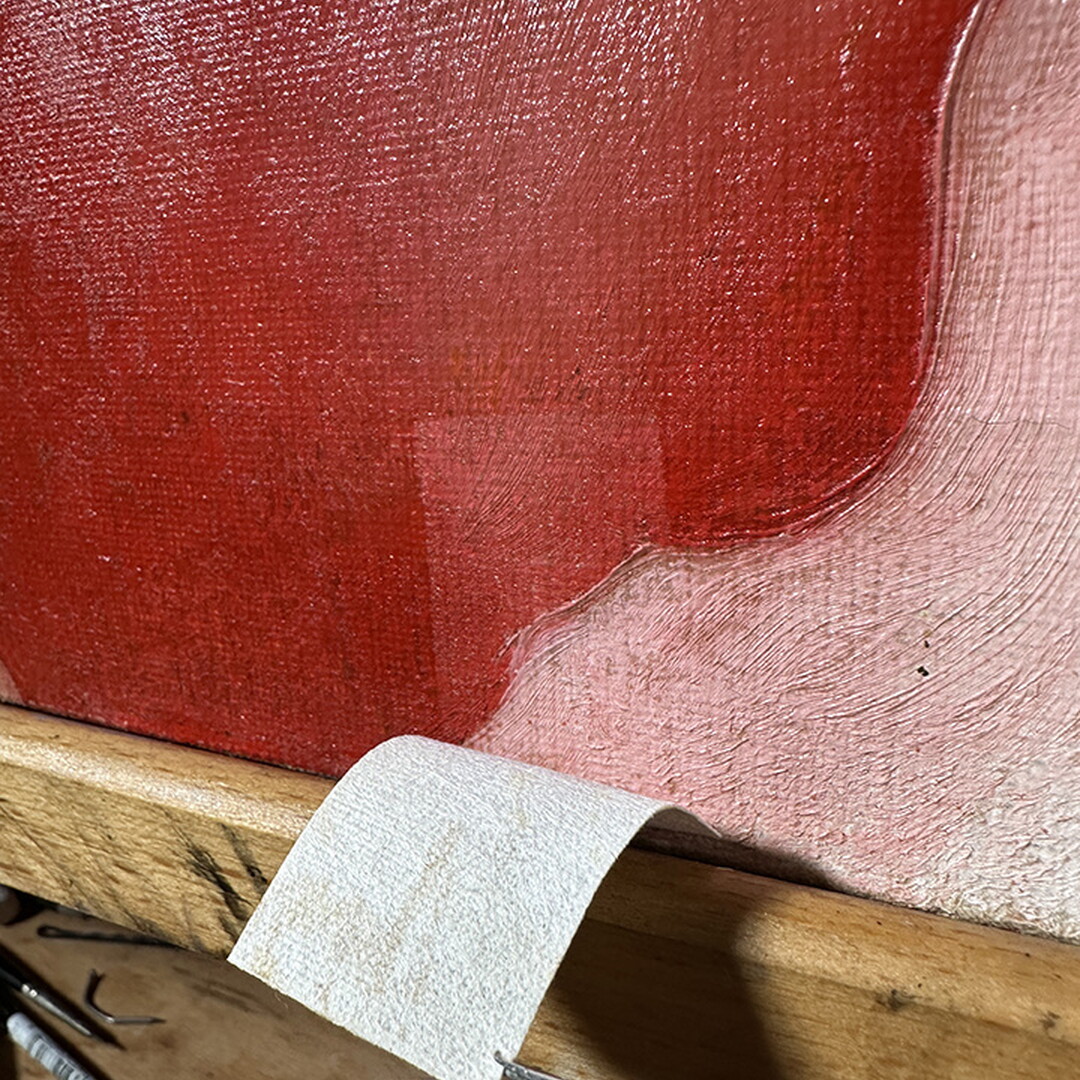
In this detail, I have used a paper-like material to “poultice” the surface coatings and varnishes from the painting. It worked, but not well enough for the thick material adhering to the paint surface.
-
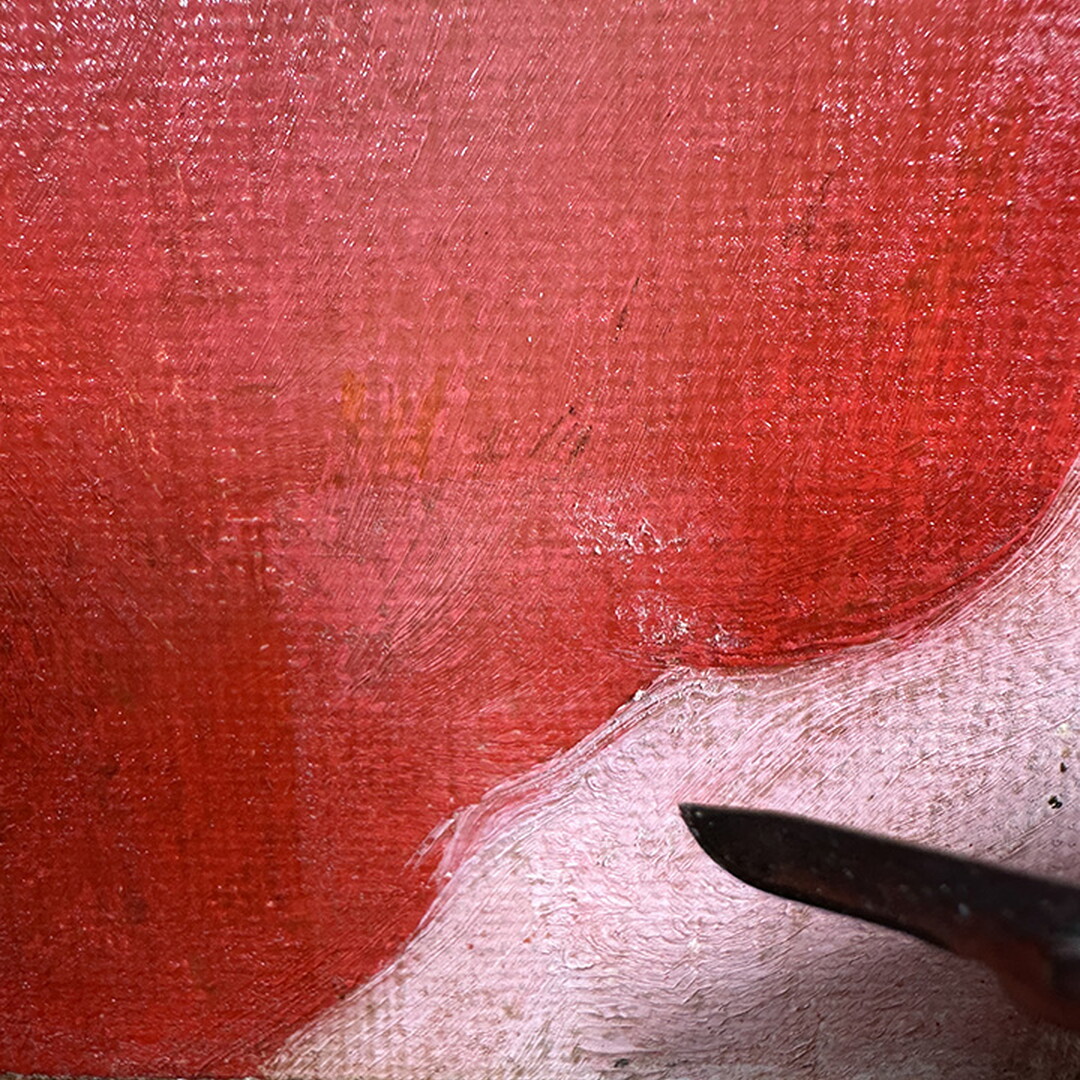
I used microscalpels to gently “tickle” the thick material that adhered through high surface tension to the paint layer, which aggregated into small white-gray clumps, characteristic of later, synthetic surface coatings.
-
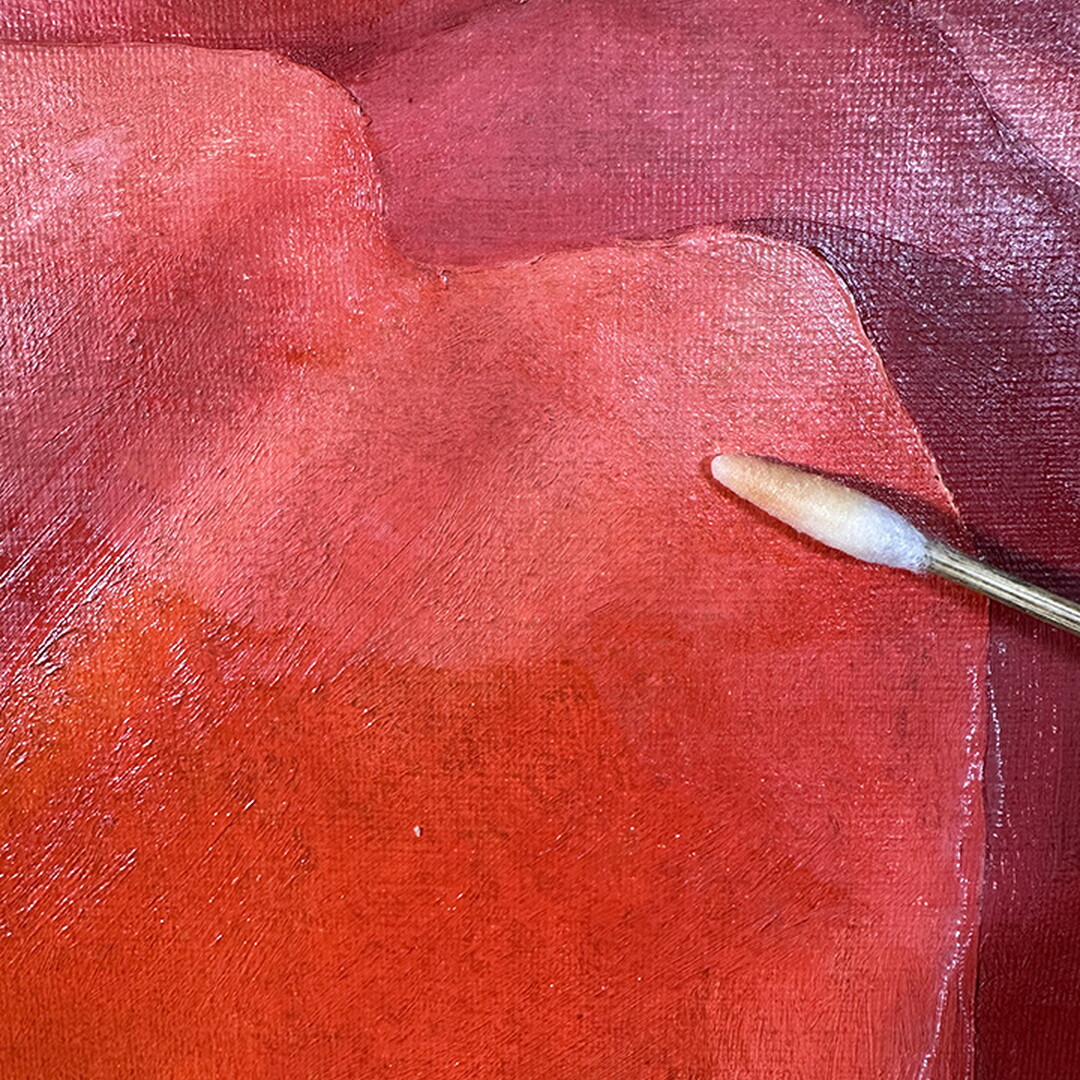
Some areas of Red Cannas had been covered with more traditional artist varnishes which had discolored yellow. I removed the varnish with hand-rolled cotton swabs and solvents. I also removed areas of restoration paint this way.
-
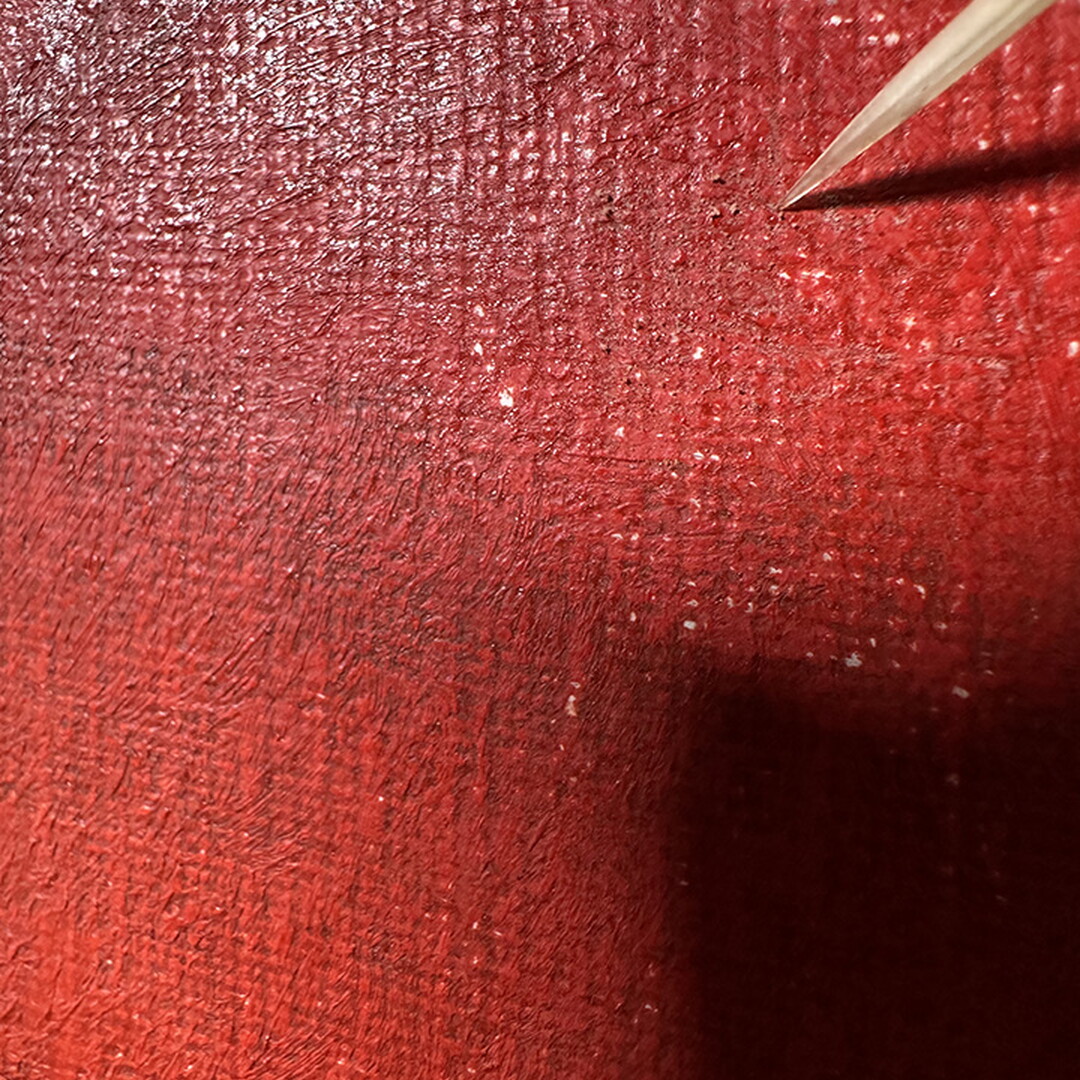
Using extra-large porcupine quills and collet, I was able to remove most of the tough, synthetic coating. Complicating the cleaning process was the artist’s variation between the contrast of textural paint layers and the canvas weave.
-
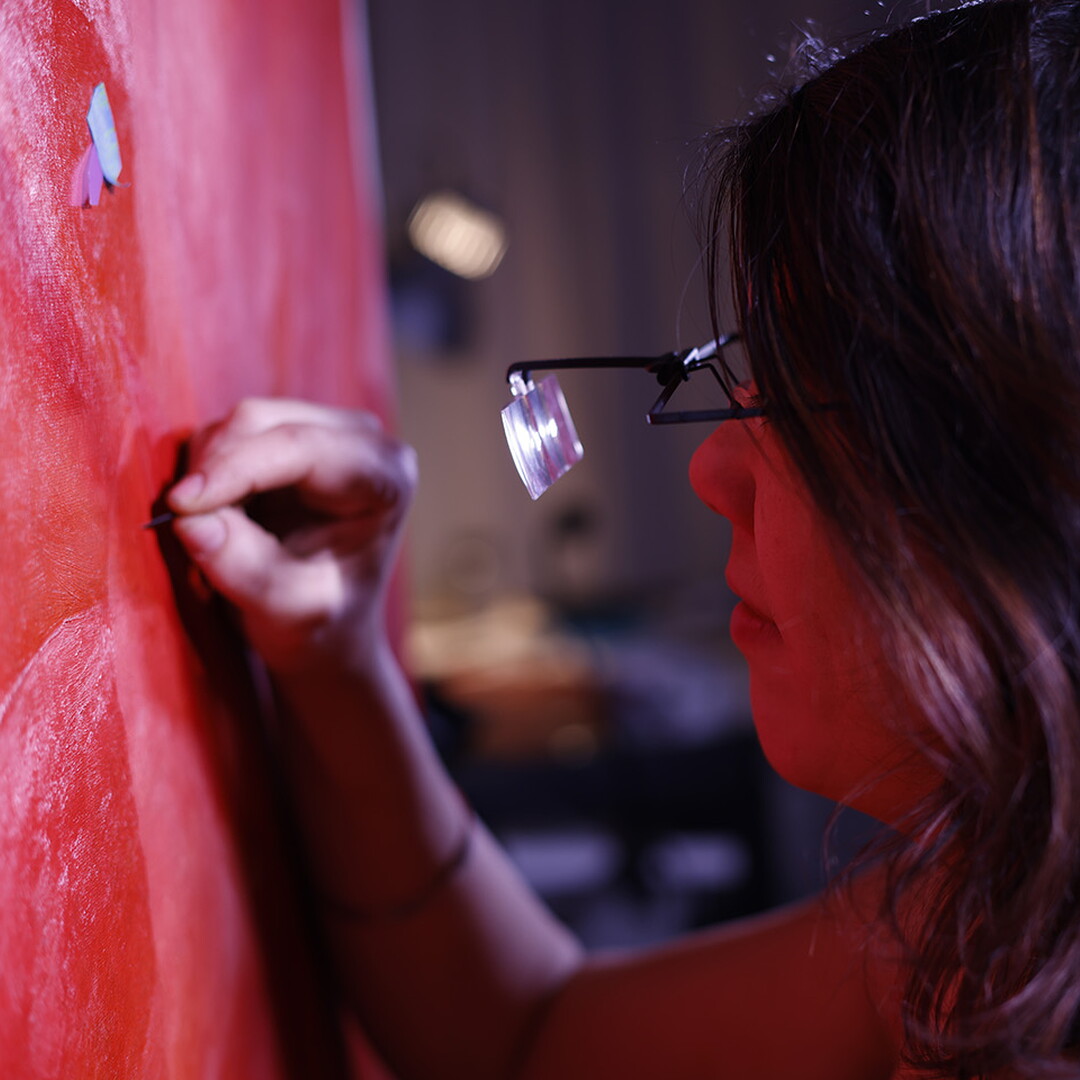
This is me cleaning Red Cannas using a quill and magnifying lenses.
-
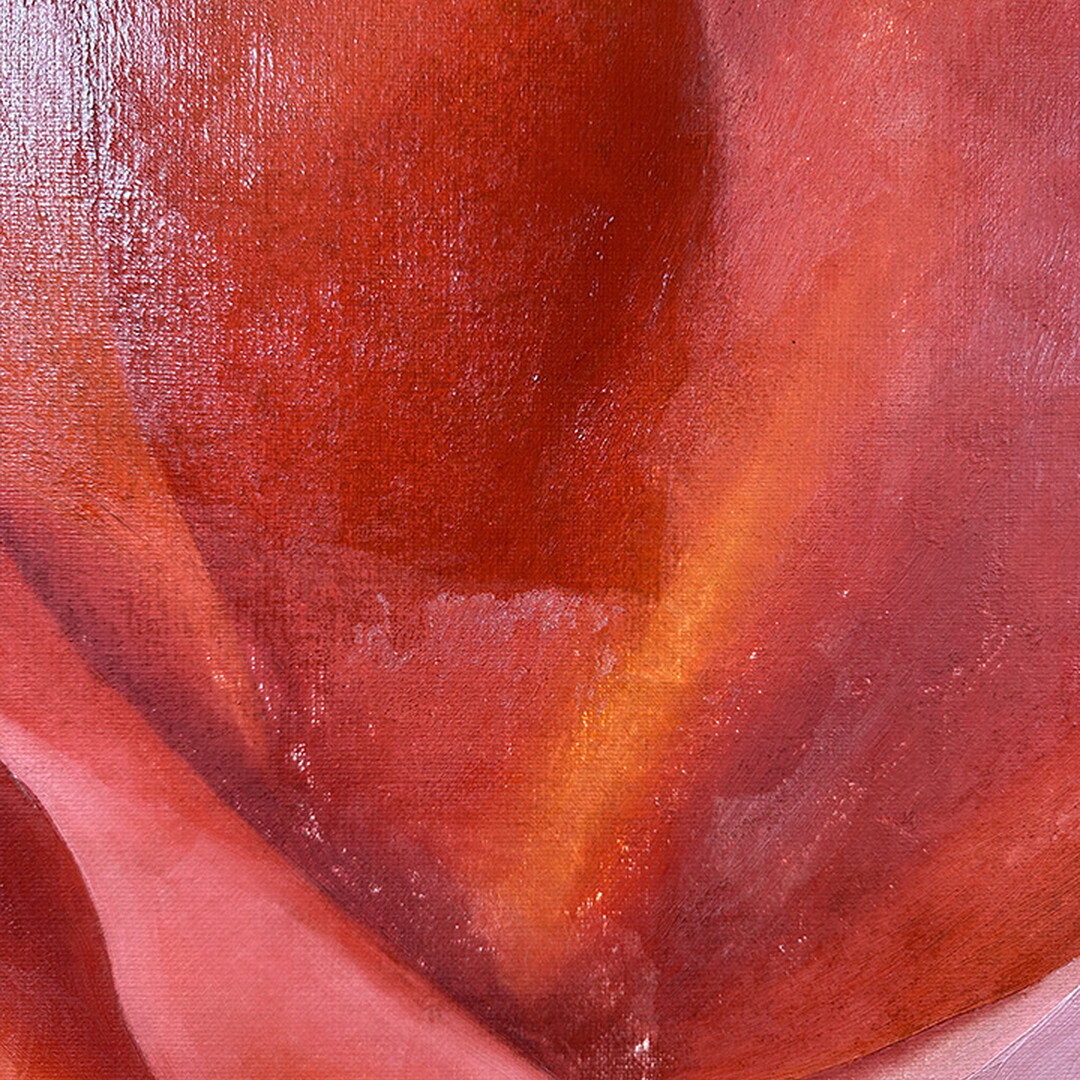
Deep into the heart of the painting’s treatment, the sheer impact of multiple layers of surface coating were evident, as well as how the aging of the materials appeared to darken, flatten, and suppress the original paint passages.
-
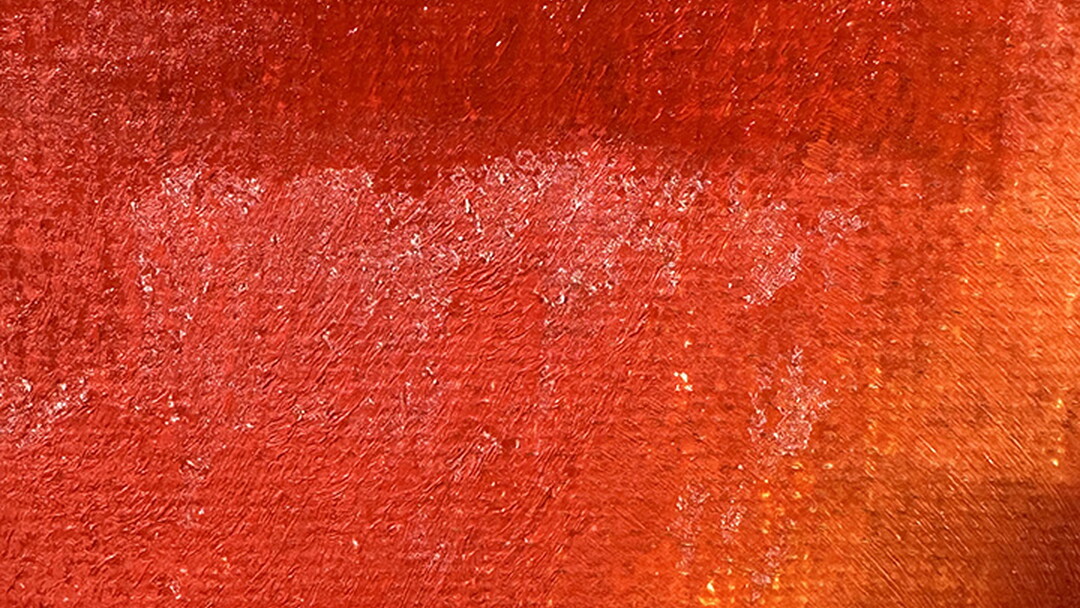
A closer detail of the prior image with small globules of coating waiting to be removed from the delicate brush texture of the painting.
Other experts
Another mark of a good conservator is knowing the limits of their own expertise. Throughout the course of treatment and throughout the preparations of these blog posts and my presentation, I was lucky to be able to engage with colleagues in the area and examine other works by O’Keeffe.
-
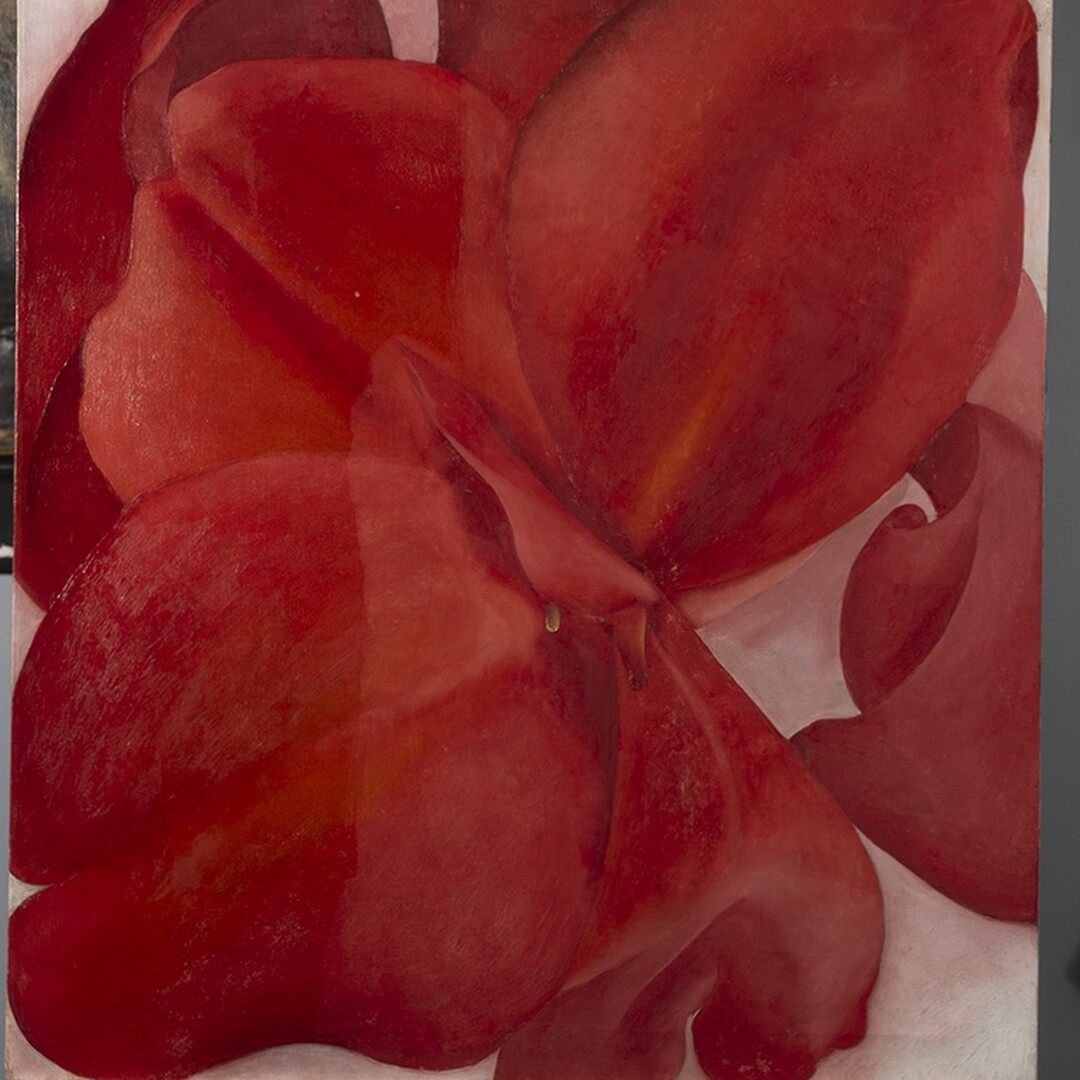
Half-way through cleaning, I took another round of images to highlight the tremendous difference the cleaning had on the reds, which is exceptionally rare in paintings conservation, given this color’s appropriation of the yellow tones exhibited by natural resins.
-
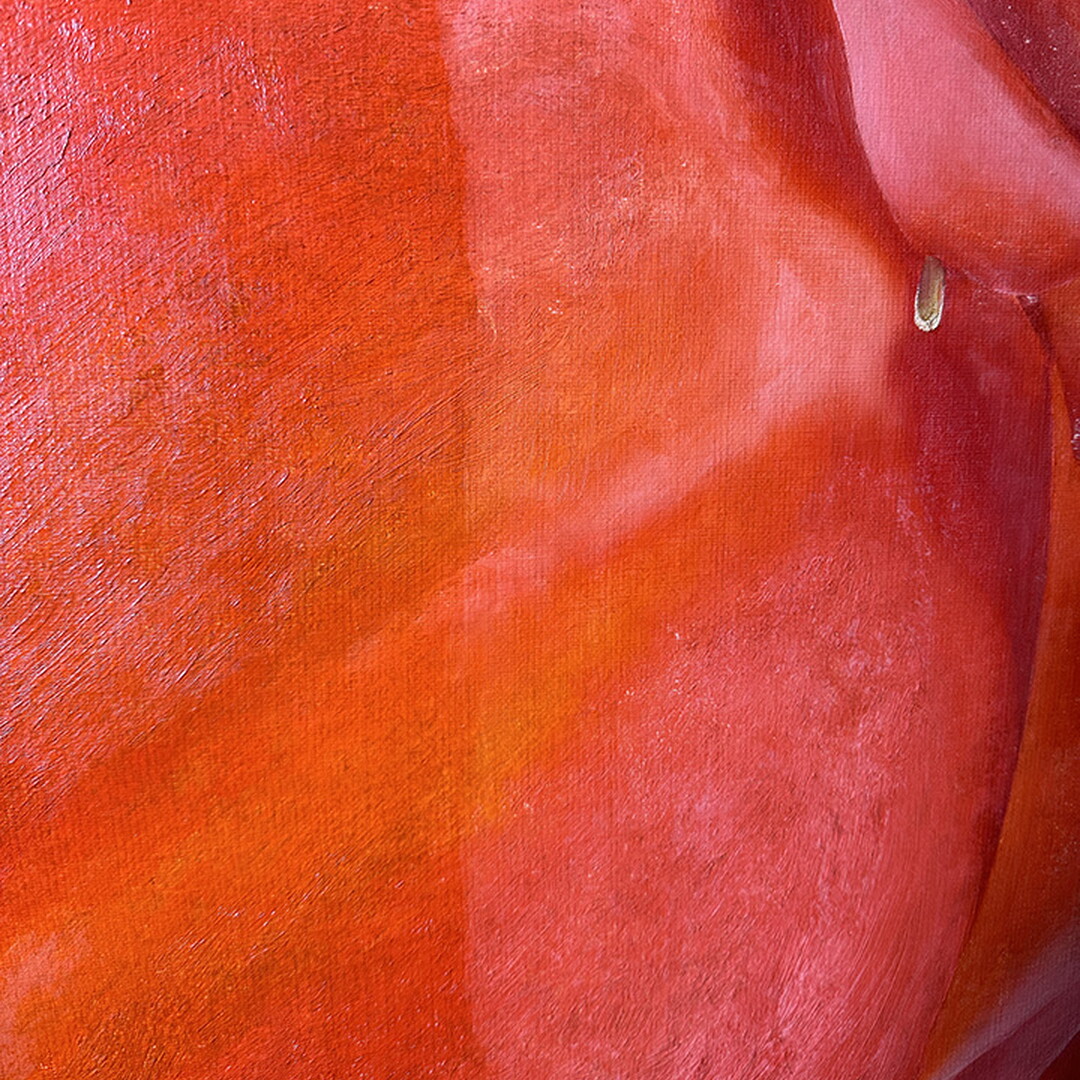
The lower center of Red Cannas is partially cleaned of both synthetic and natural resin surface coatings, revealing the temperature contrast between cool pinks and deep-orangey reds. O’Keeffe exploited these differences by carefully choosing which whites were used in each passage.
-
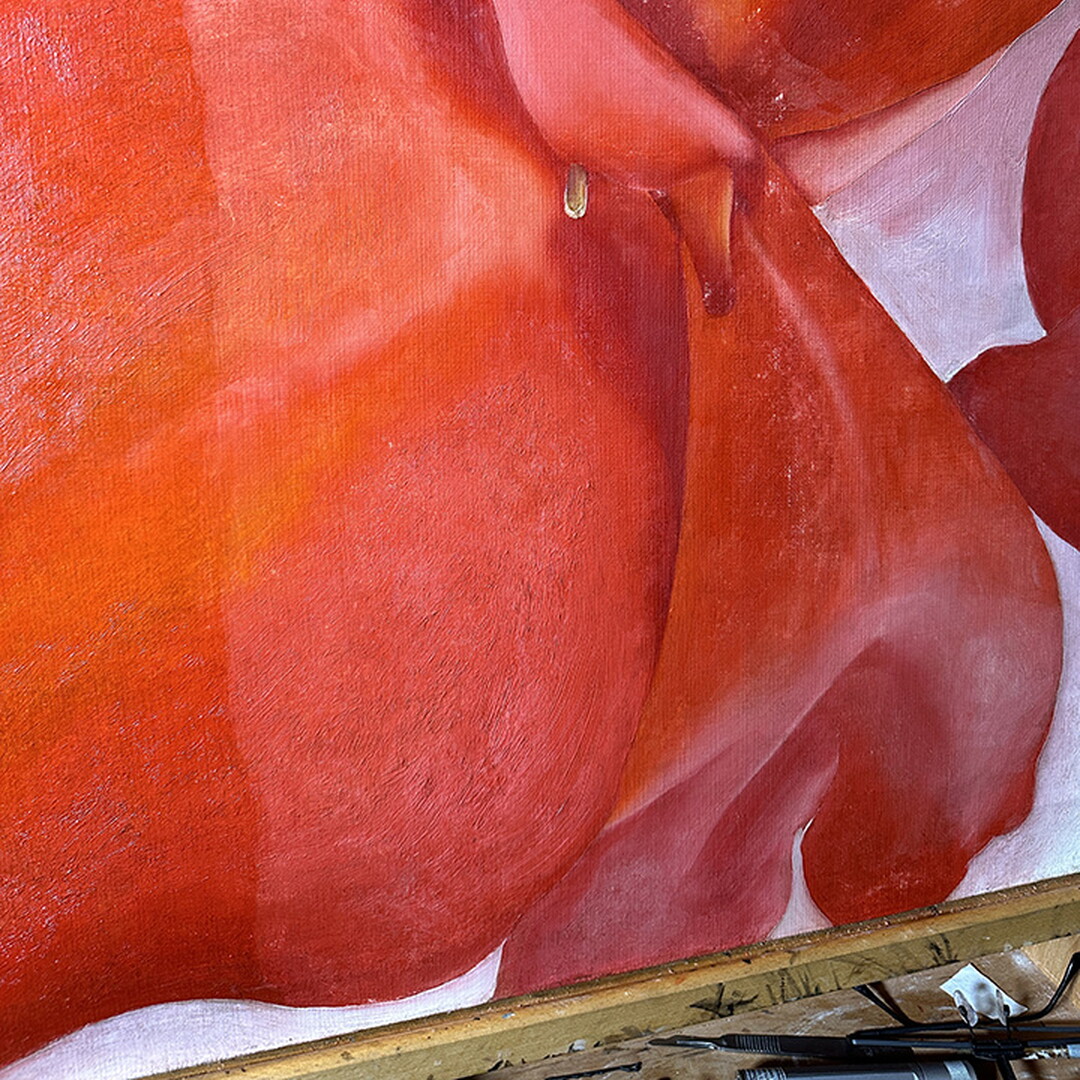
The cleaned lower petal shows off that temperature contrast, and appears velvet-soft after cleaning.
Dale Kronkight, Conservator at the Georgia O’Keeffe Museum of Art, was key to these discussions. While Dale was involved only virtually, our discussions with regard to varnish reduction and post-treatment varnish steps were critical to re-interpret the artist’s practice of leaving her surfaces unvarnished. Barbara Buhler Lynes, author of the catalogue raisonné, visited the studio to sign off on the visual appearance.
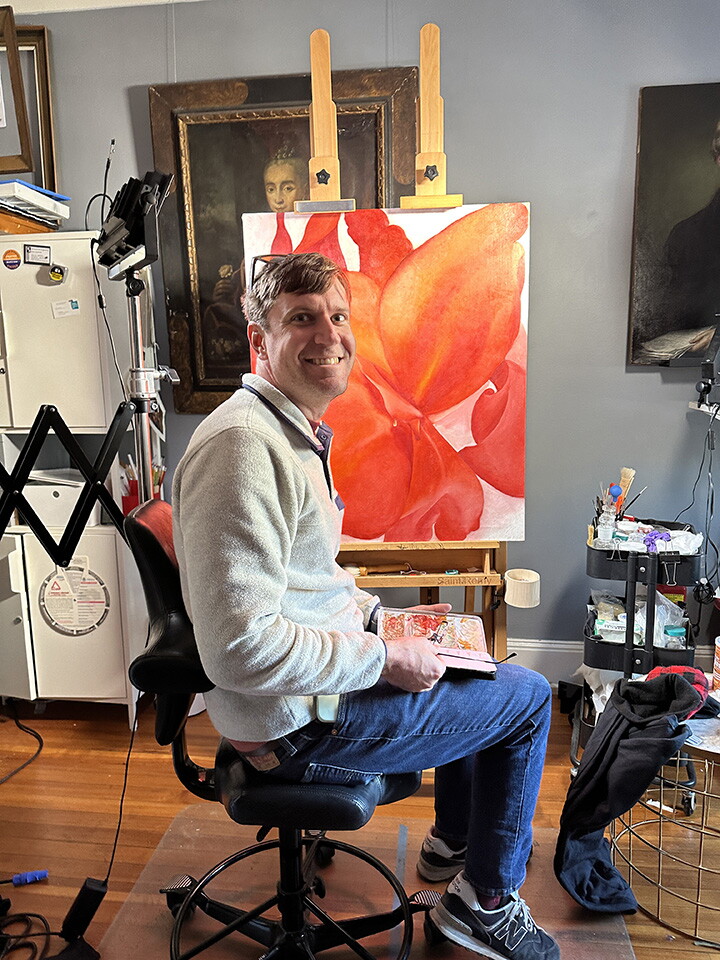
Curator Spencer Wigmore reviewing the painting after treatment.
Former Carter curator Spencer Wigmore (who has taken on a new role at the Minneapolis Institute of Art) said that his relationship to the painting changed after close review post-treatment, which was the validation I needed to feel confident about sending the painting home to Fort Worth.
Conservation reports
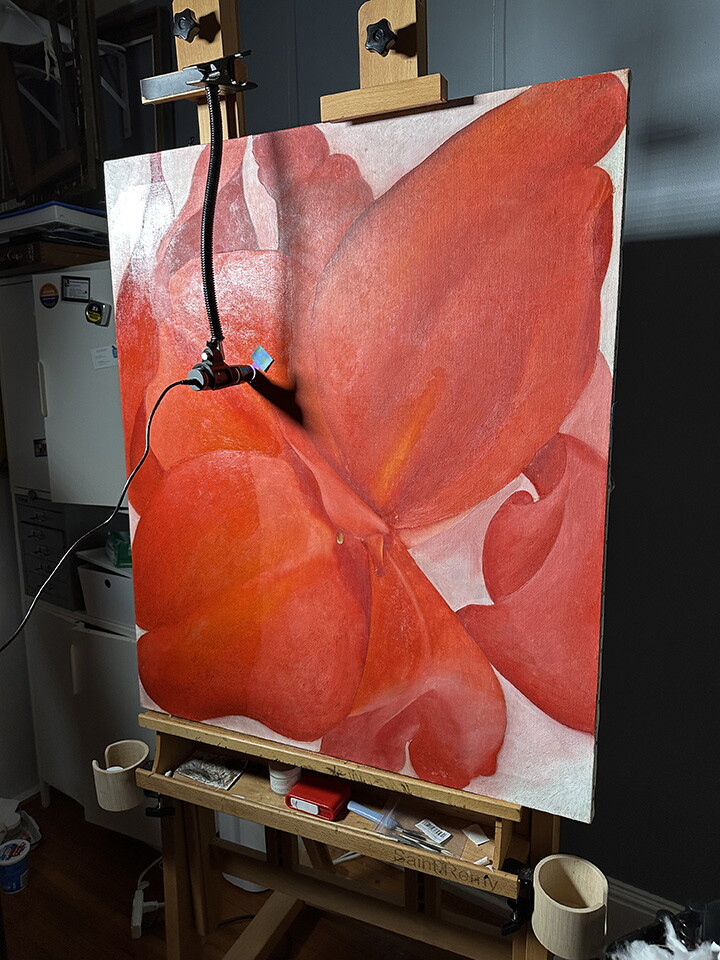
Before completing the cleaning, I sampled an area of original reworking, discovered through imaging, to study individual paint layers.
Another non-negotiable standard of my practice is the treatment report, which, along with supporting images, serves as a testament to the treatment. It records not only what I brought to the artwork (when the time comes for the future conservator to remove it), but also what intangible facets I was bringing away from the painting, especially when there seemed to be much more applied to the painting than was necessary, a tricky concept of “over-caring” for the painting, much as a lining would have been.
My hope is to continue to be able to serve paintings in ways that build a deeper understanding of past treatments (and those caretakers) in order to inform a client’s understanding of and advocacy for a painting.
Read part 3 of Caregiving for Georgia O'Keeffe's Red Cannas!