The Carter Blog
Carter ARTicles
Caregiving for Georgia O’Keeffe’s Red Cannas (part 1)
Dec 17, 2025
From the gallery walls through conservation treatment, we’re giving you an insider’s perspective through a series of blog posts that will culminate in a public presentation on January 8, 2026, titled “Material Dynamics and Mentorship: Responsive Impacts on the Conservation Treatment of Georgia O’Keeffe’s Red Cannas.”

Developing relationships
The Carter does not have a paintings or sculpture conservator on staff; to fill those gaps, the Museum hires such conservators on a contract basis, developing a trusted working relationship with them over time. In the early stages of engaging a conservator, availability and pricing are key. I was brought in for a general survey of the collection several years ago, thanks to my experience working with and examining Georgia O’Keeffe’s paintings at the Smithsonian American Art Museum, Palmer Museum of Art, and in private collections.
Some treatment plans began unfolding in the Carter’s conservation department, including minor treatments on O’Keeffe’s paintings in the collection.
Gallery placeholders
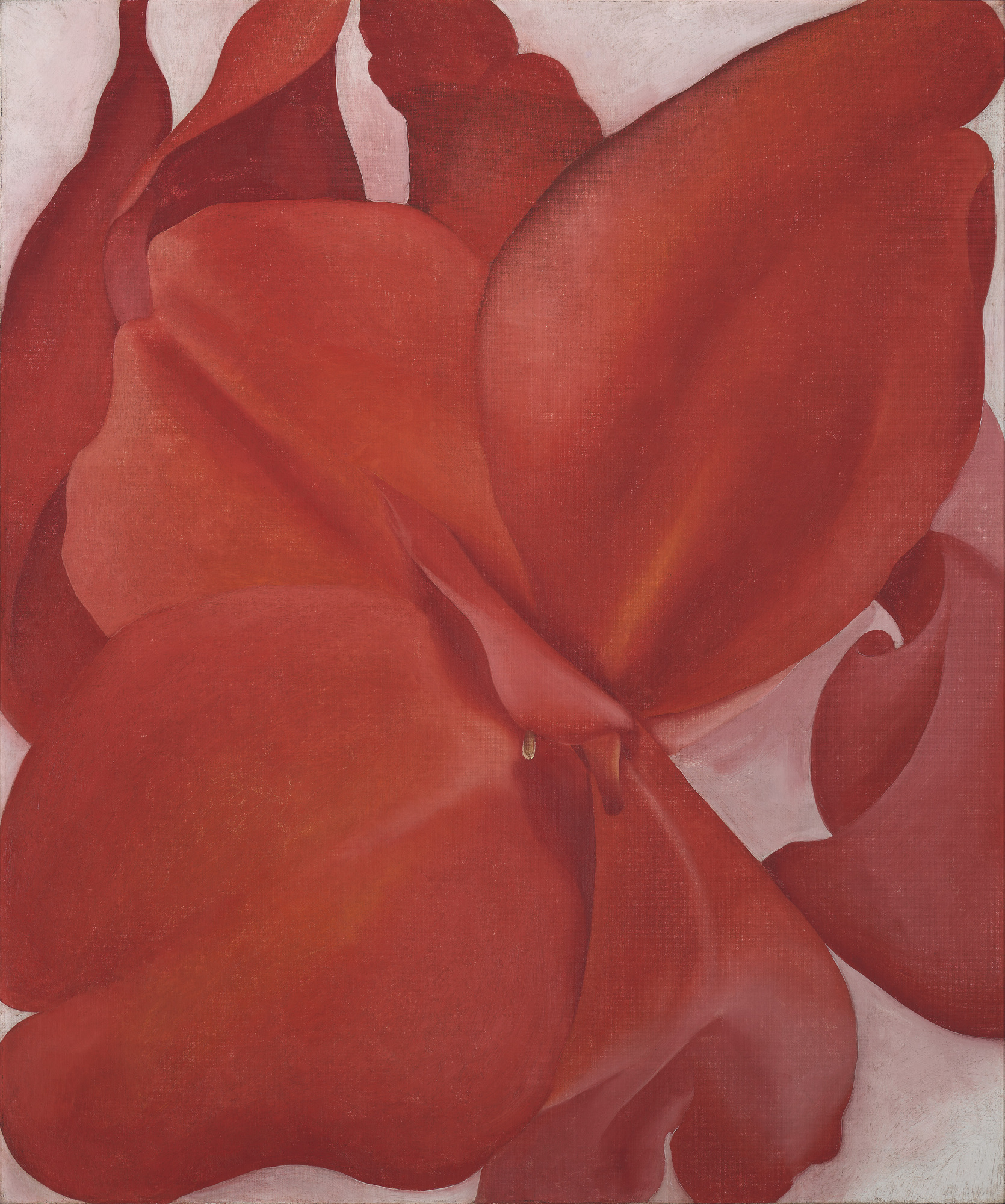
In such survey situations, select artworks are gallery staples and their removal from the gallery walls is considered only under the most exceptional cases. Though the Carter has other paintings by O’Keeffe, Red Cannas is the only one of her large format florals in the collection, plausibly the most famous of them, let alone the largest.
-
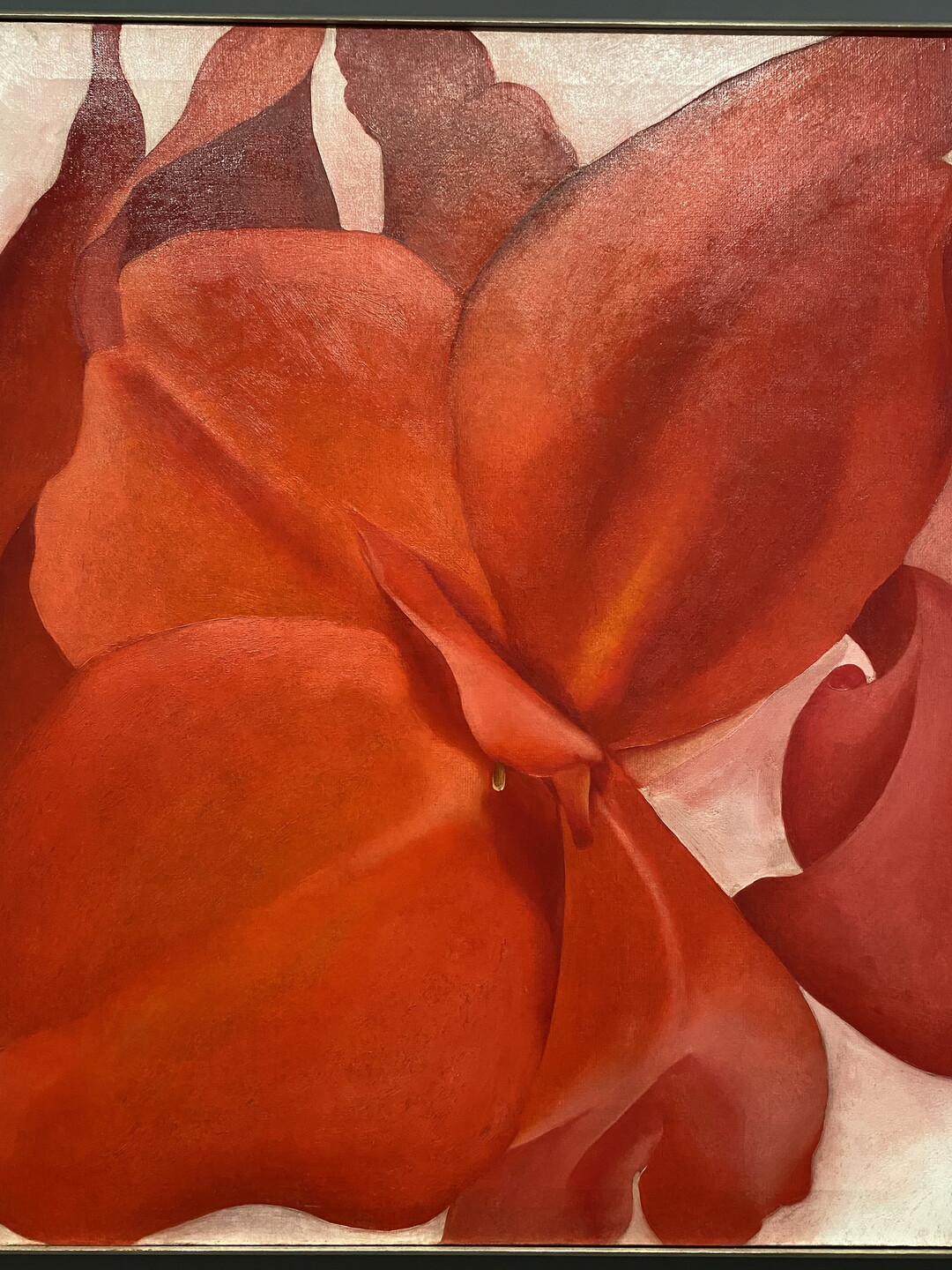
Red Cannas as I first encountered it in the galleries. It is a work that appears to embrace you, pulling you closer with its curling petals at upper left and right. Gallery lights reflect off the top of the painting in this image, an indication of the gloss.
-
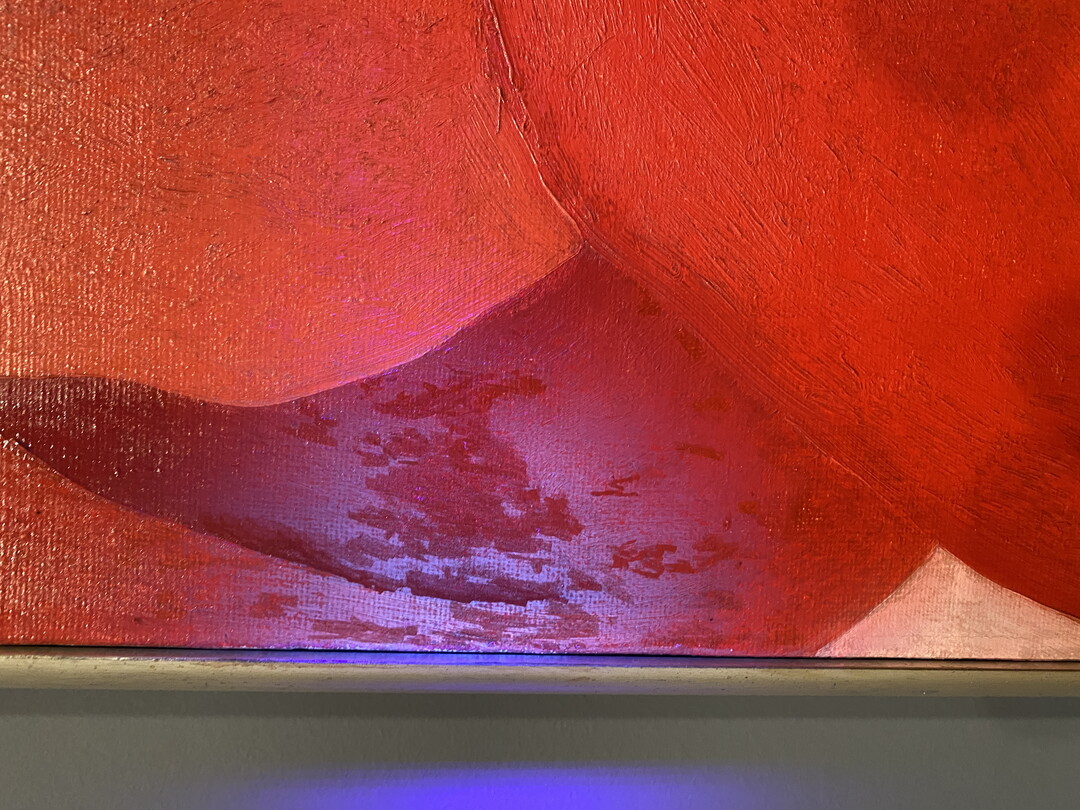
A detail of Red Cannas, taken with a UV handheld flashlight. The darker purple-ish spots are areas of restoration paint, called “retouching.”
Sometimes, when a painting cannot be removed during a conservation survey but might benefit from treatment, I will request past conservation files and bring handheld equipment to the painting. These tools include digital USB microscopes; ultraviolet handheld flashlights; and one of my favorite pieces of equipment, a digital Nikon camera that has been converted to full-spectrum sensitivity to allow for ultraviolet, visible, and infrared imaging, also known as multiband imaging.
In the case of Red Cannas, something about the appearance of the painting didn’t add up against the conservation files: The painting appeared to be “lined,” a method of gluing a damaged canvas painting onto another fabric support, due to its flattened appearance, yet there was no record of lining. I returned to my research notes on O’Keeffe. At the same time, there were intense planning sessions for exhibition, conservation, and curatorial departments to negotiate the time needed for the painting to be off view, get treated, and returned to Carter. We’ll find out more about the painting and its treatment in our next installation regarding the studio treatment.
-
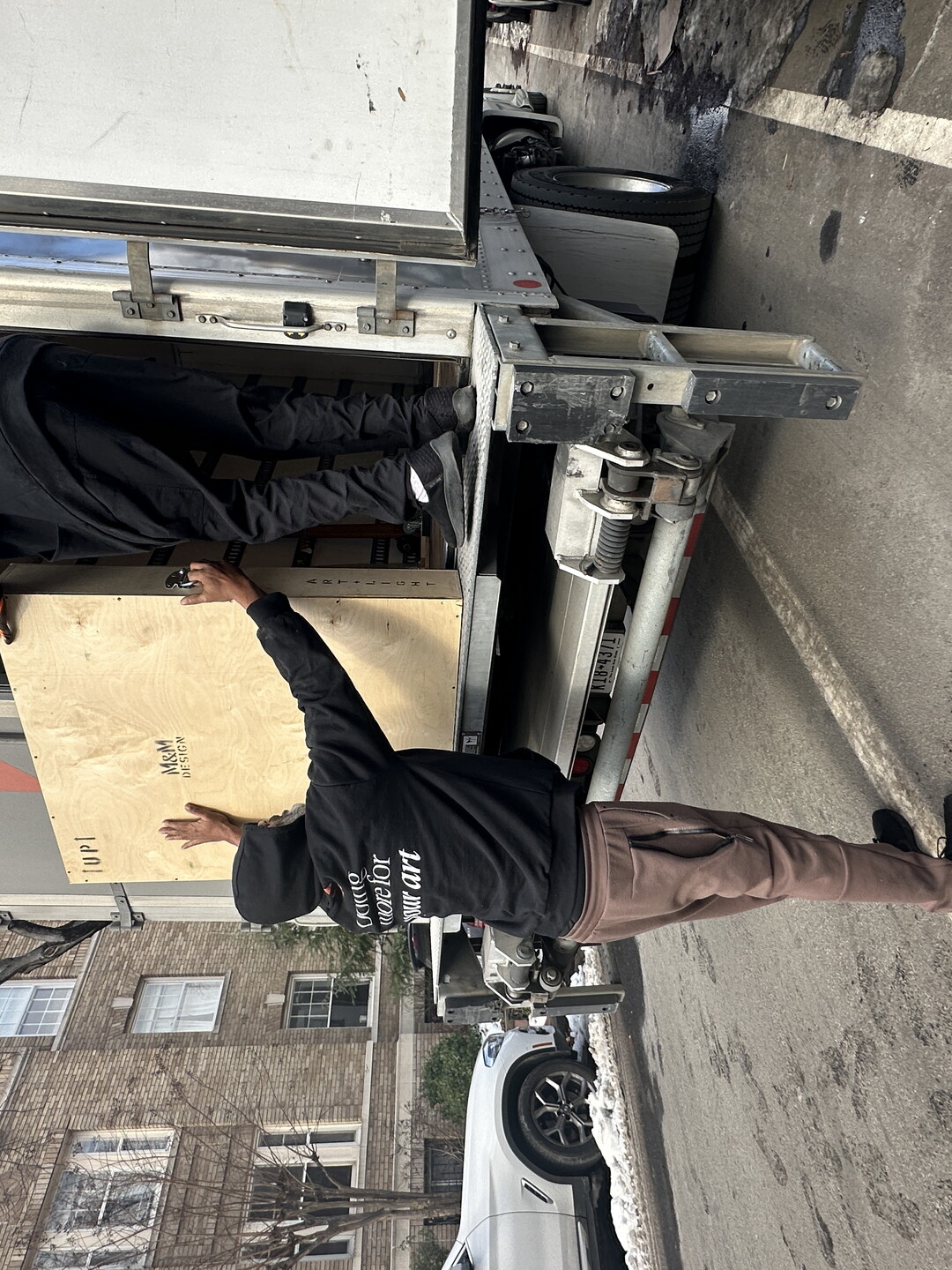
Professional art handlers were contracted to crate and transport the painting directly to my studio in Washington, D.C.
-
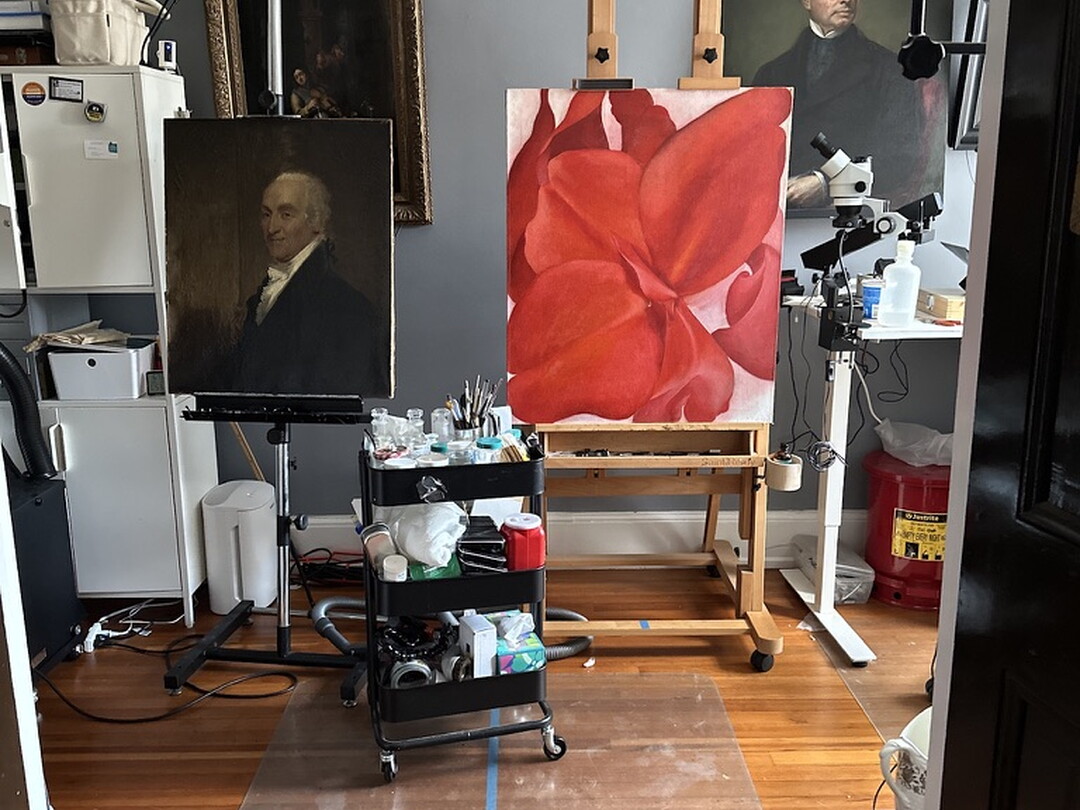
Red Cannas ready for treatment in my studio.
In the meantime, learn more about moving Red Cannas in a prior blog post: Travels with Georgia.
Don't miss parts 2 and 3 of Gwen Manthey's Caregiving for Georgia O'Keeffe's Red Cannas.