The Carter Blog
Carter ARTicles
Preserving diversity: conservation treatment of a drawer from The Texas Cabinet
Mar 25, 2026
¡Lee esta publicación de blog en español!
The Texas Cabinet (2020), by contemporary artist Mark Dion, functions as a 21st-century cabinet of curiosities. Built as a wooden piece of furniture with multiple shelves and drawers, the cabinet brings together a wide range of objects collected by the artist during four journeys across Texas.
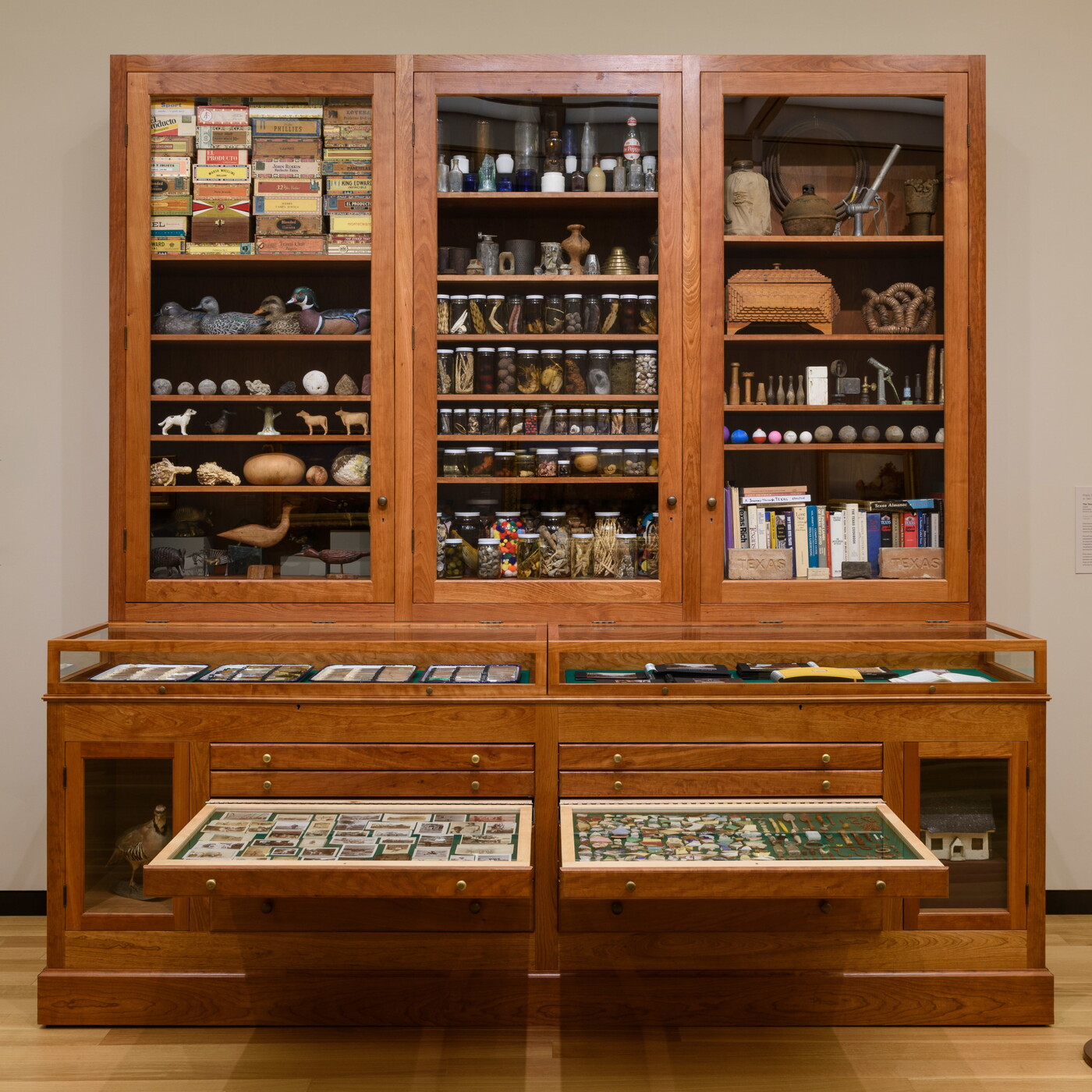
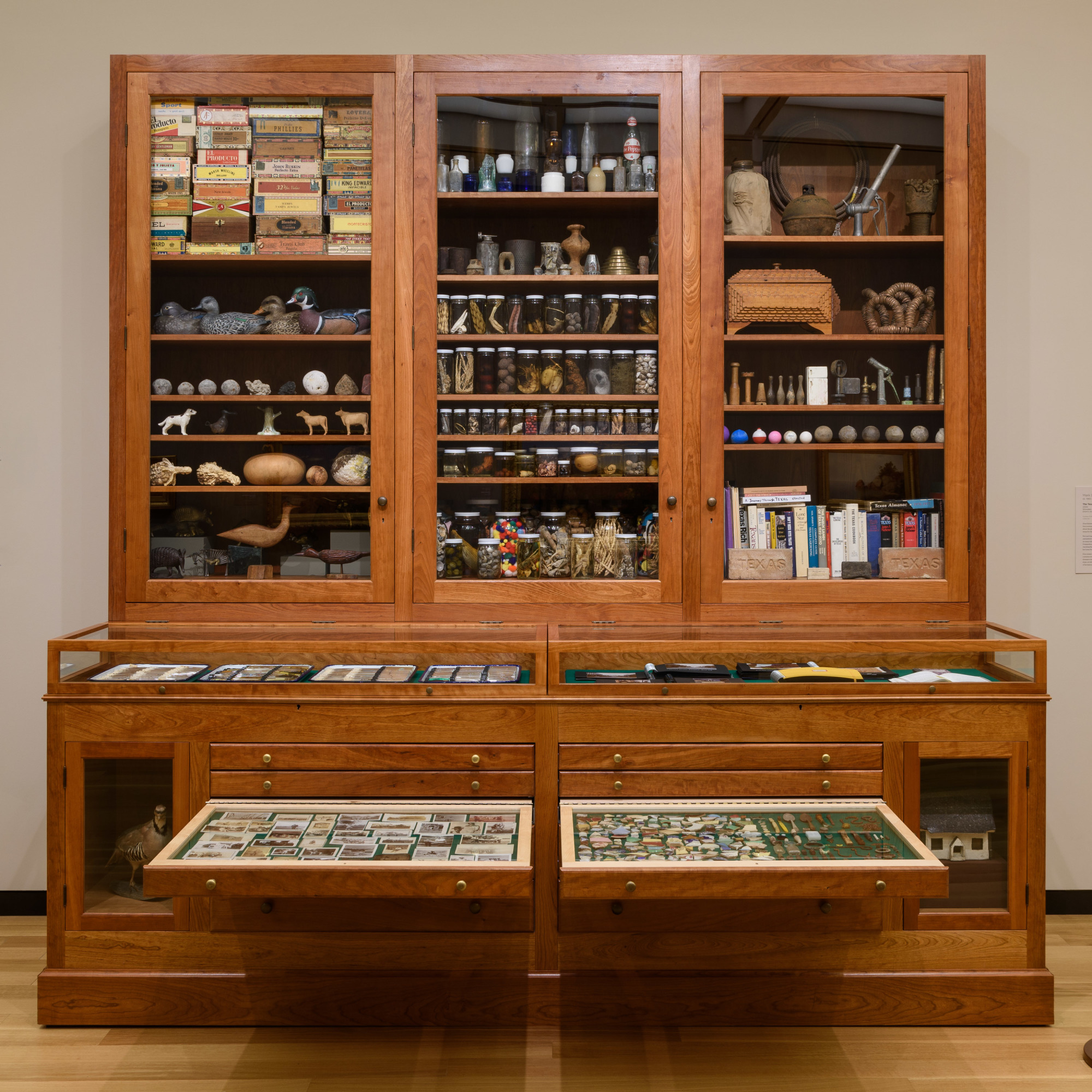
For these travels, Dion followed the routes of historical travelers and drew on diverse voices and forms of knowledge, including botanists, a Comanche poet, descendants of ranching families, and an entrepreneur committed to preserving her community in the face of urban development. The result is a collection that goes beyond the state’s most familiar symbols and reflects a personal, and at times unexpected, perspective on the territory and the people who inhabit it.
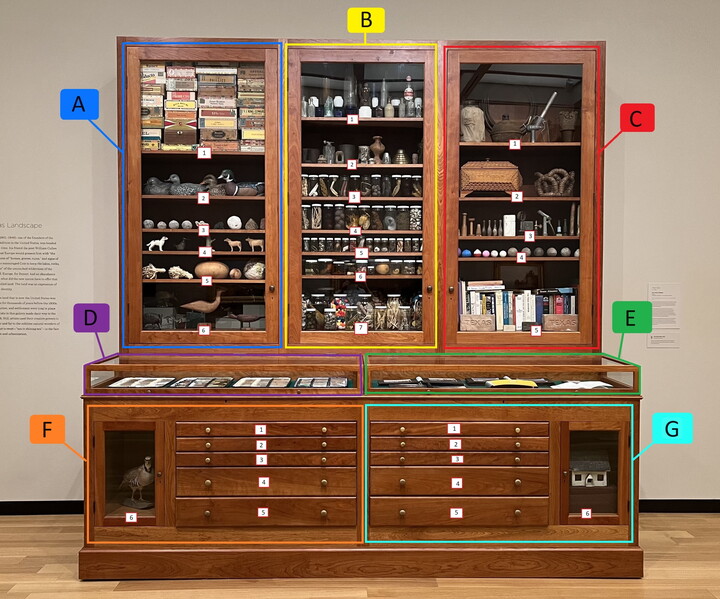
Overall view of The Texas Cabinet with labeled sections. The conservation treatment focused on drawer G3.
I work in the conservation laboratory, and I collaborated with the Museum’s conservation team, including Chief Conservator Jodie Utter and Conservator Cristina D’Amico, to address a conservation concern identified in one of the cabinet’s drawers. The cabinet and its contents blend science with the everyday and the humorous. Among its drawers are objects ranging from a black widow spider to hotel shampoo and cereal containers, as well as remnants of a haircut and nail clippings from the artist himself. This material diversity is intentional and central to the meaning of the work and the experience it offers the viewer.
One drawer, many materials
We had identified active mold in Section G, Drawer 3 of The Texas Cabinet. The drawer brings together a wide range of materials, including fragments of glazed ceramics, metal objects such as cutlery, fishing hooks, and bullet casings, as well as plastic and glass components. All of these objects are adhered to a shared base with hot glue, turning the drawer into a small material ecosystem.
From a conservation perspective, this made treating the drawer particularly challenging. The wide variety of materials meant that each object responded differently to moisture and treatment methods. In addition, the brightly colored base added another layer of complexity as solubility testing was necessary to ensure that the cleaning and disinfection materials would not alter its color or appearance. Addressing these challenges required a coordinated approach that considered both the stability of the artwork and the safety of the conservators working with it.
-
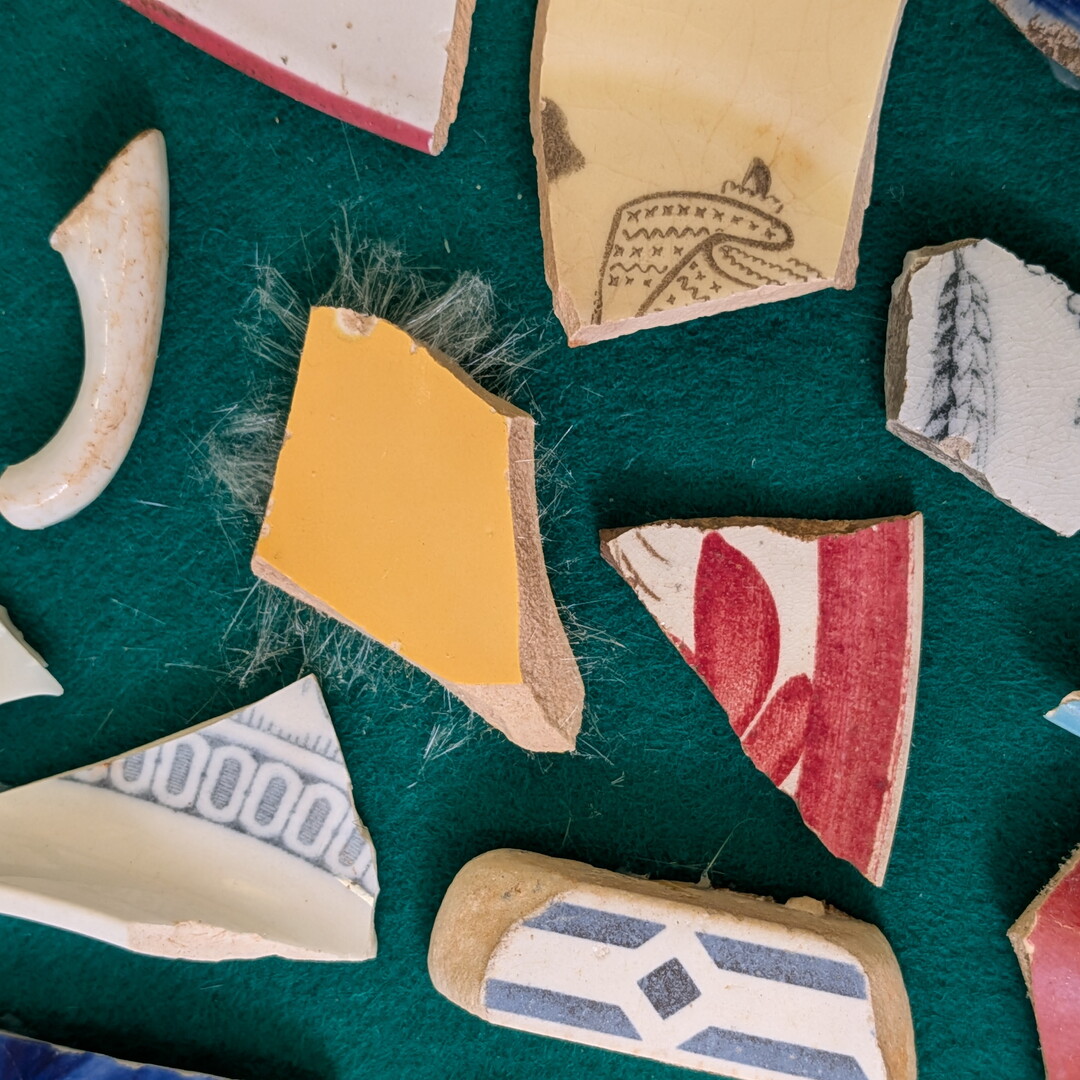
Mold growth on the unglazed edges of ceramic fragments.
-
-
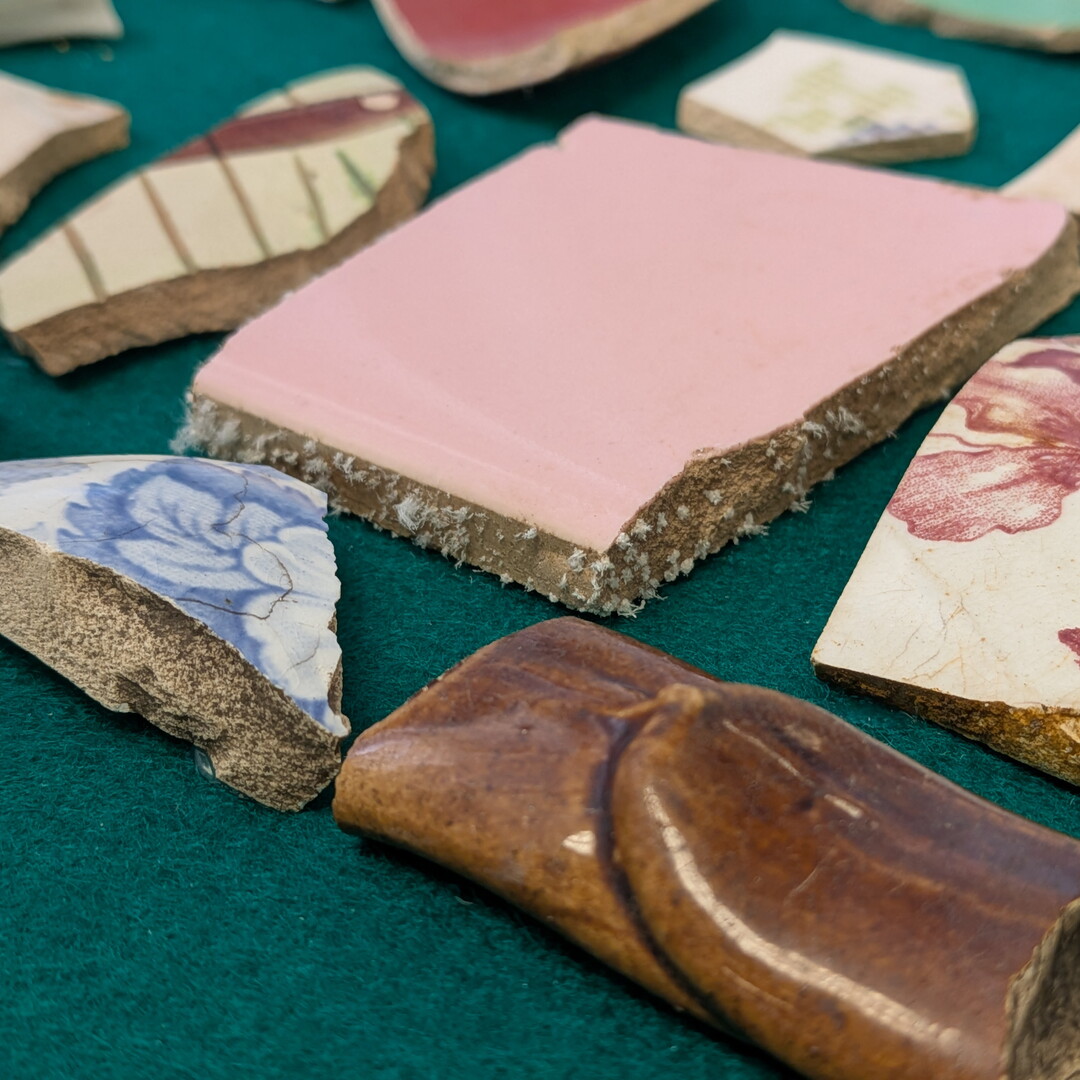
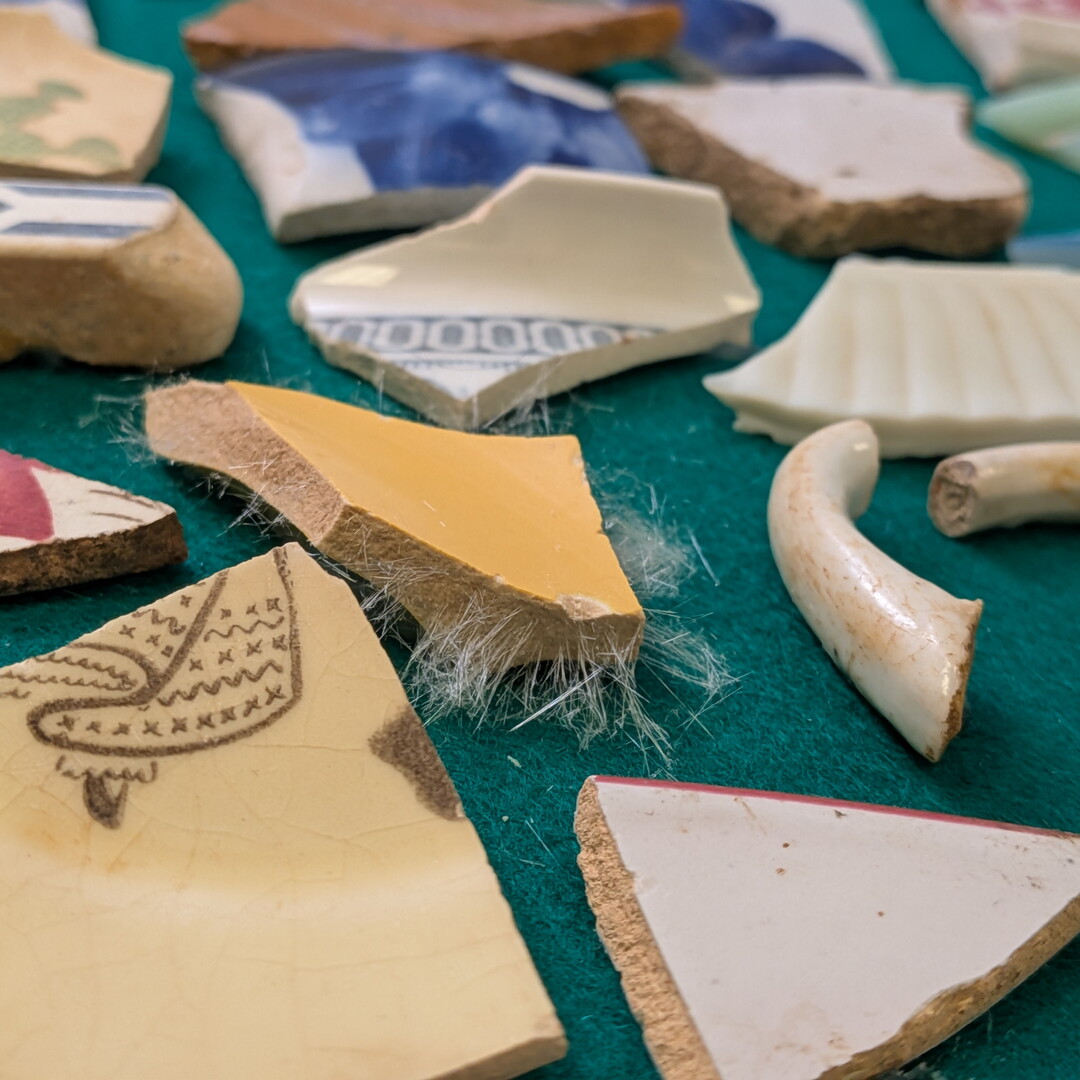
During the condition assessment, we identified the mold on the unglazed edges of several ceramic fragments. Although mold is naturally present in our environment at all times, including on ourselves, it can become active and grow on objects when certain humidity and temperature conditions are present.
Mold growth affects not only the appearance of materials but can also compromise their long-term stability. The presence of active mold also poses risks to nearby objects and to the people working closely with them, which made it essential to design a specific conservation protocol for this piece.
Conservation beyond “fixing” objects
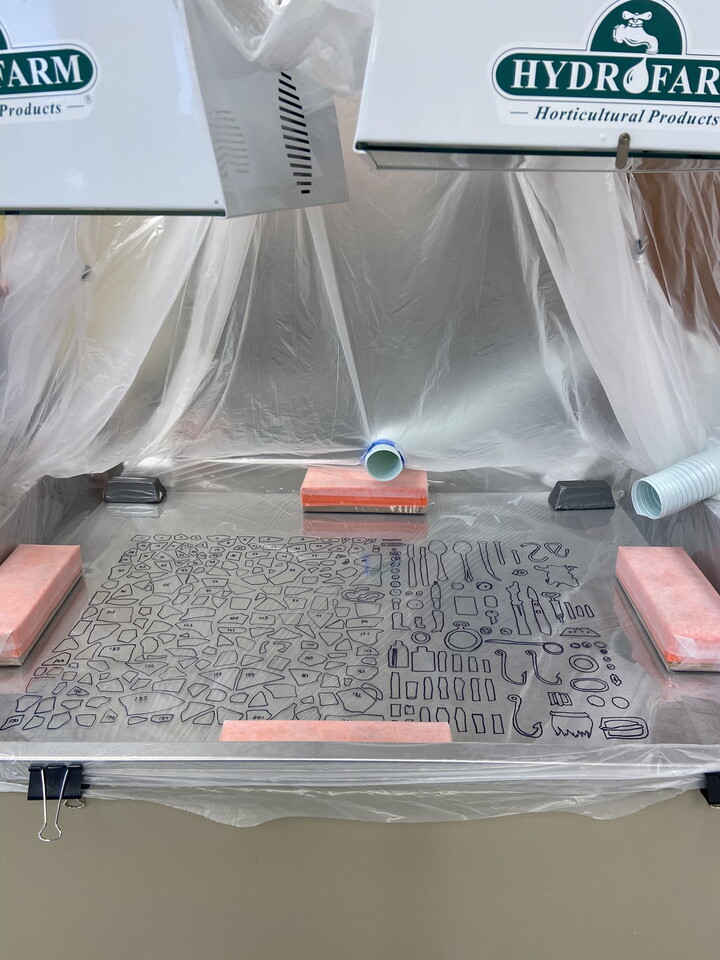
Design of the disinfection chamber with air extraction system and the template of the artwork inside.
As part of this holistic approach, we designed a disinfection chamber specifically for the drawer and its contents. This chamber was made to reduce the risk of cross-contamination between artworks and to ensure safe working conditions for the team. Throughout the treatment, we used appropriate personal protective equipment, including masks, safety glasses, gloves, and lab coats, to ensure a safe and responsible process.
A key aspect of conservation is not only applying treatments to objects but understanding how the environment influences them. Monitoring and controlling relative humidity and temperature, together with a deep understanding of materials, are essential tools for preventive conservation. For this reason, we carried out the treatment only when specific temperature and relative humidity conditions were in place in the conservation lab, making certain that it was safe for both the artwork and the conservators working on it.
A tailored treatment
Before beginning the intervention, the conservation team documented the drawer in detail. Cristina created an exact template to record the location of each object. This template served both as a reference tool throughout the treatment and as part of the artwork’s permanent record.
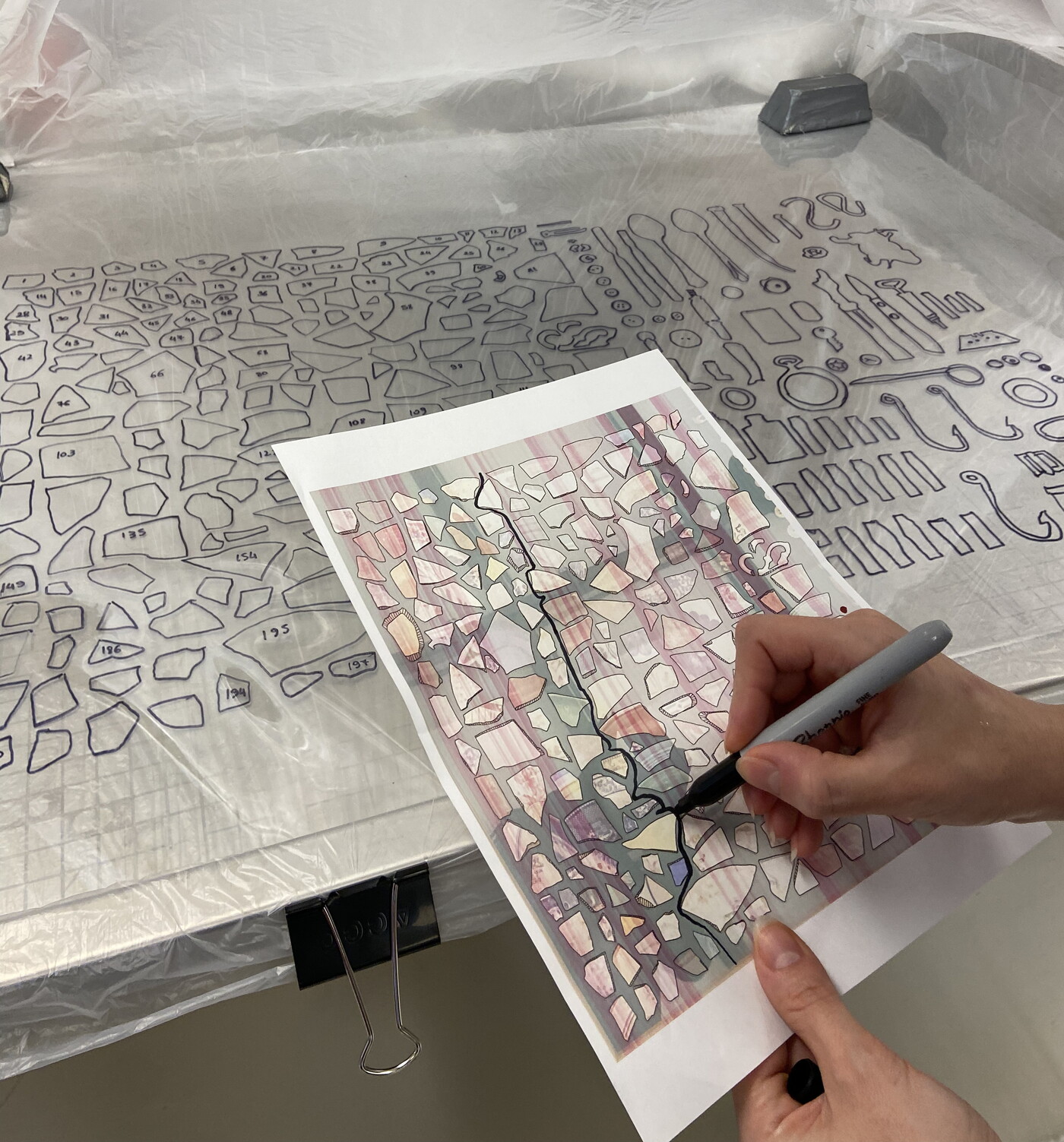
Disinfection chamber design and detailed documentation using templates and photographs.
The conservation team carried out the testing process to evaluate the stability of the different materials in relation to the proposed methods and materials. Once we confirmed suitability, we began with a surface cleaning to remove accumulated dust and mold spores.
-
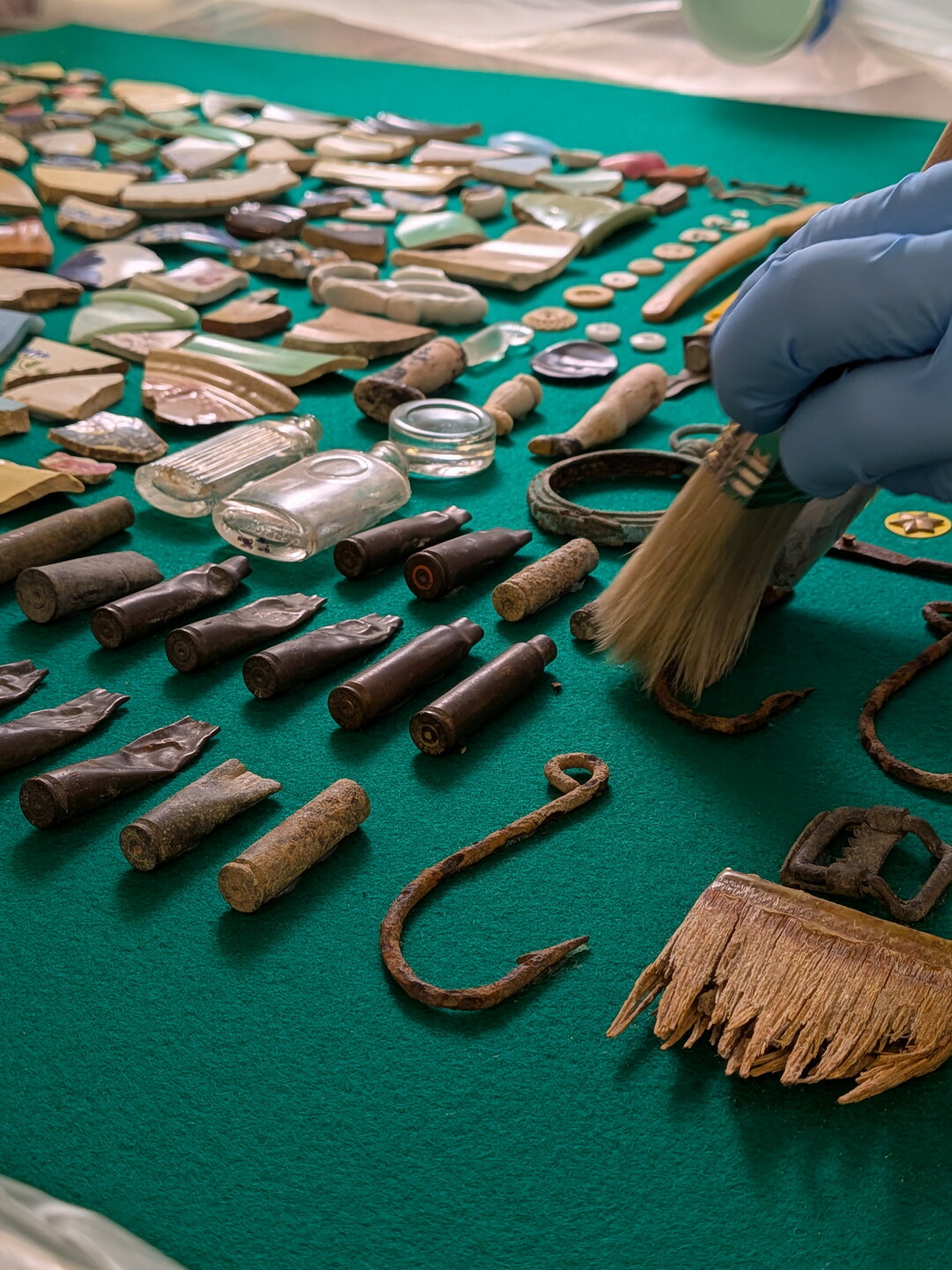
Mechanical cleaning process accompanied by vacuuming.
-
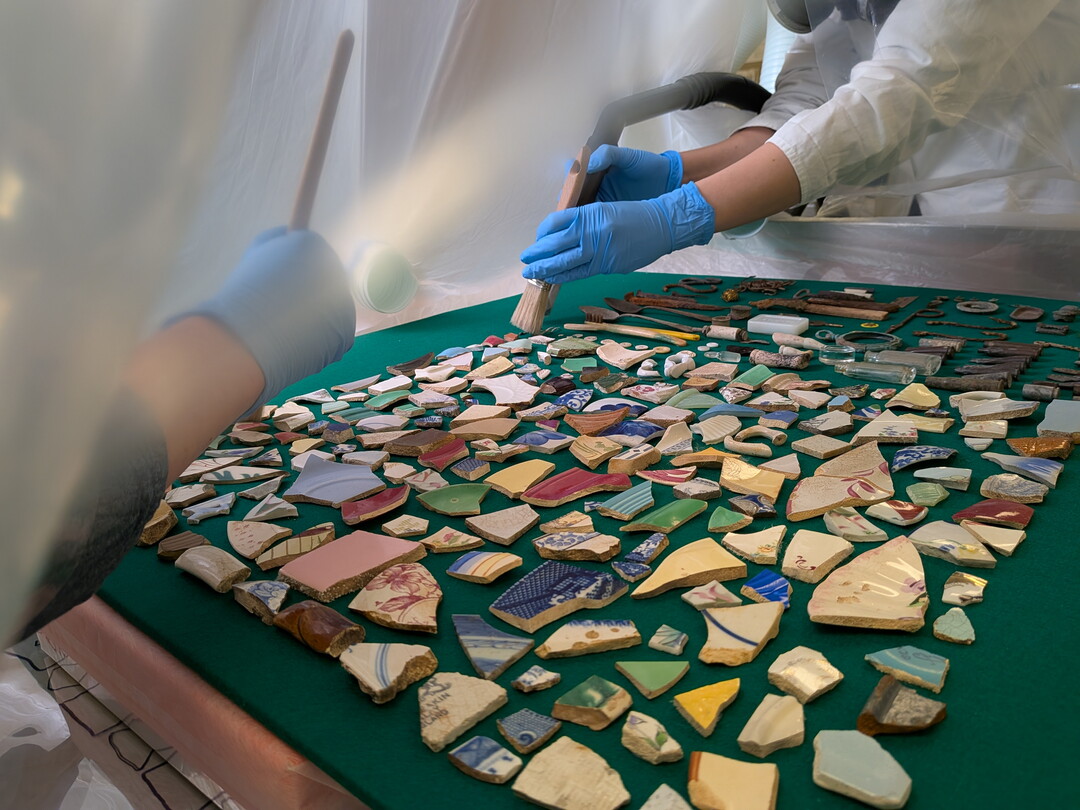
The mechanical cleaning process accompanied by vacuuming.
-
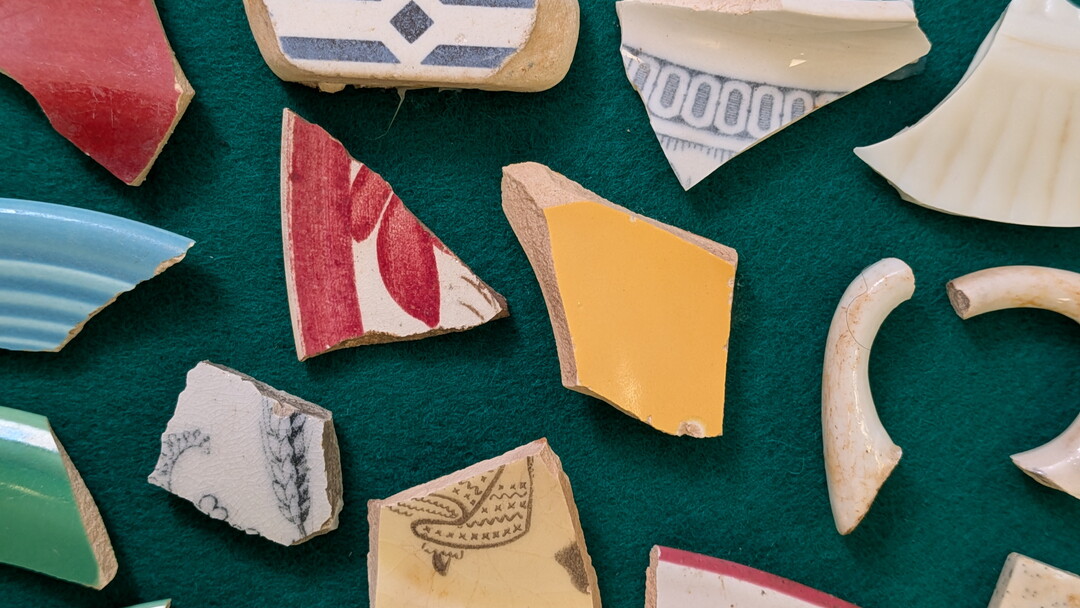
The ceramic fragments after cleaning and solvent-based disinfection.
We followed surface cleaning with a careful cleaning and disinfection process using ethanol alcohol applied in a controlled manner with specialized sponges. As a final stage, the conservation team performed additional mold deactivation using UV grow lights radiation under carefully monitored conditions.
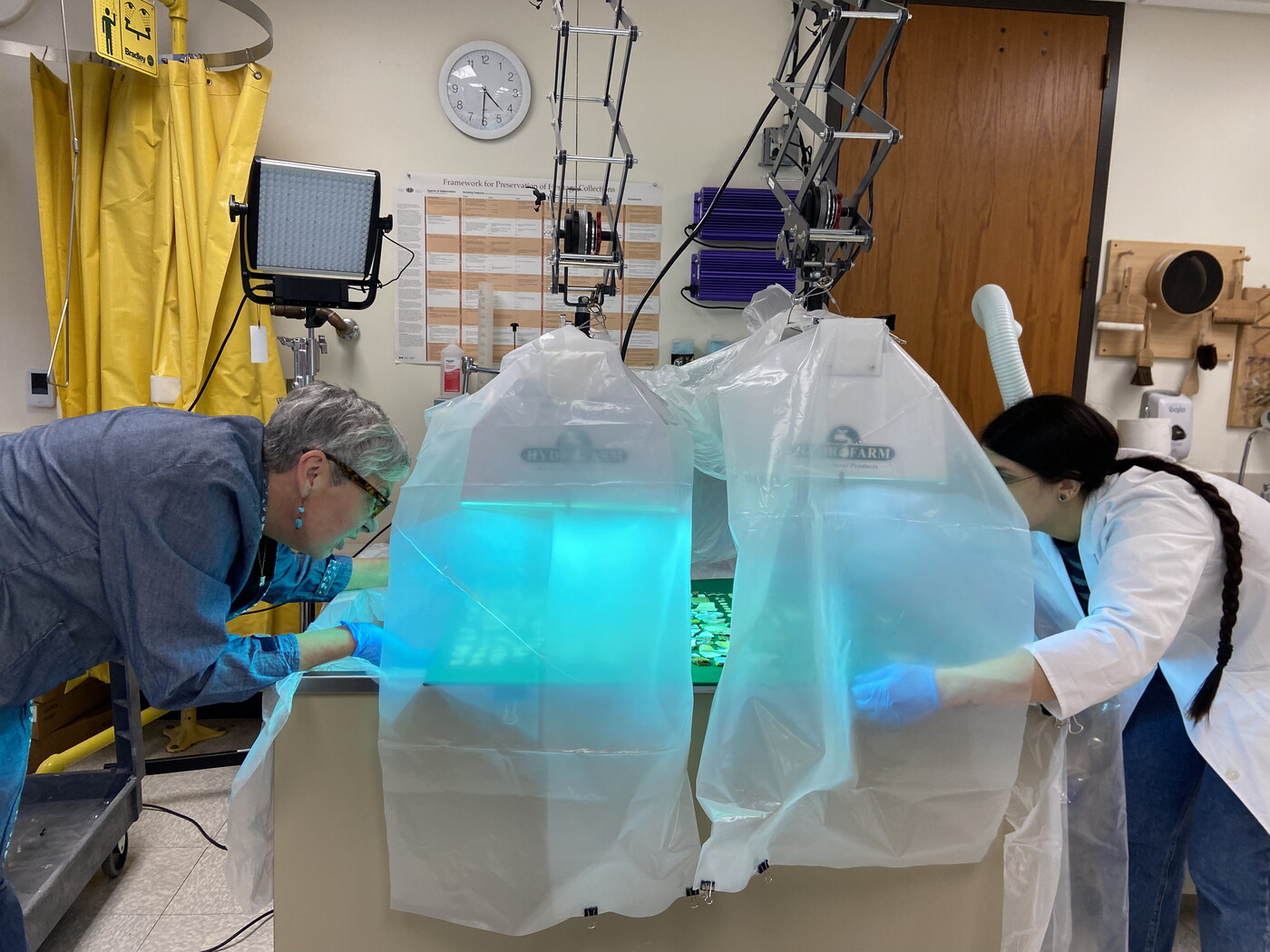
Jodie and Cristina prepping the final disinfection stage using UV light exposure.
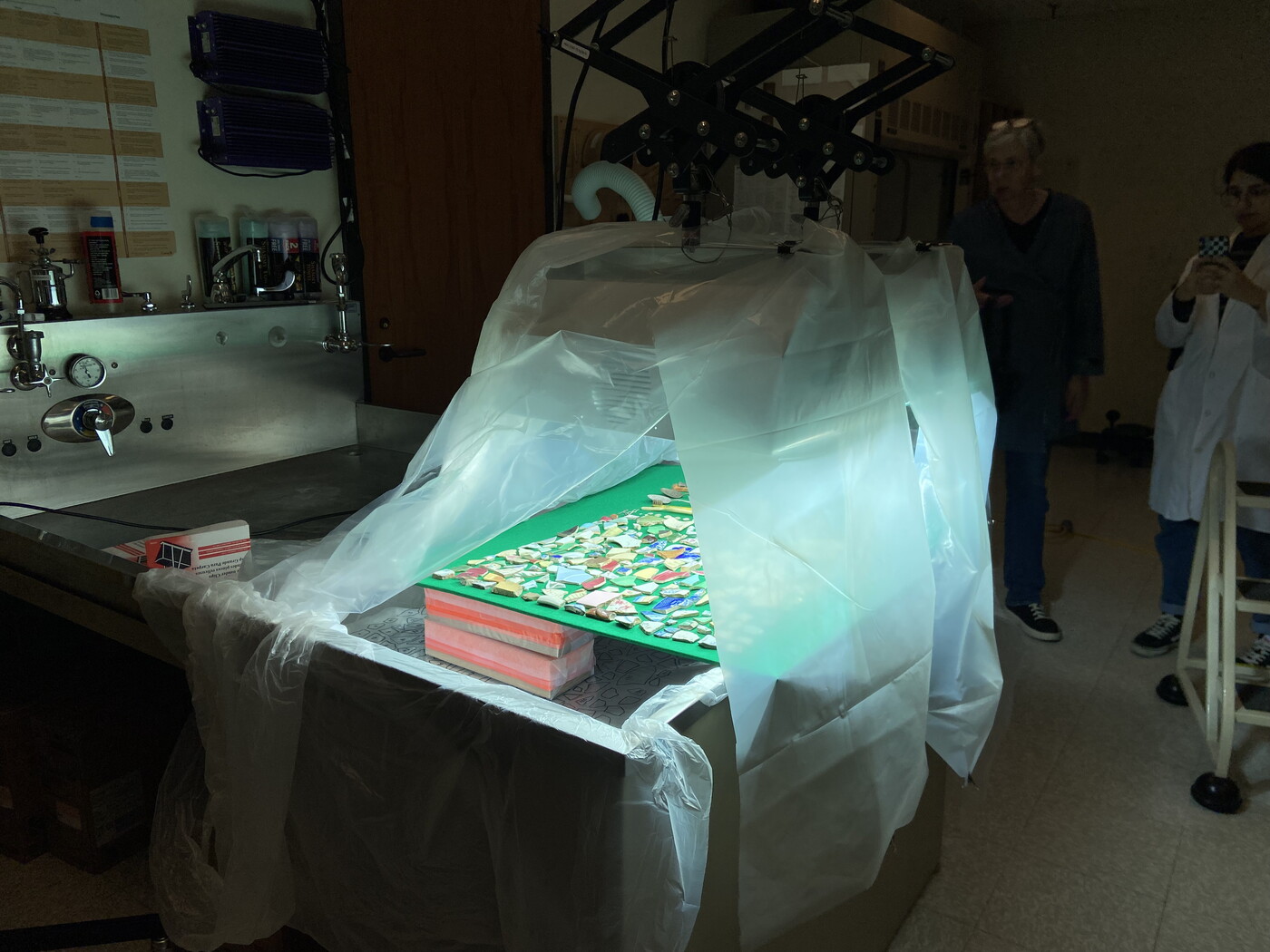
The final disinfection stage using UV light exposure.
The role of environmental control
Once the treatment was completed, Jodie, Cristina, and I reintegrated the drawer into the cabinet with a new system for environmental control and monitoring. This system includes absorbent materials that help maintain low relative humidity levels, as well as a thermo-hygrometer that continuously records temperature and humidity inside the drawer.
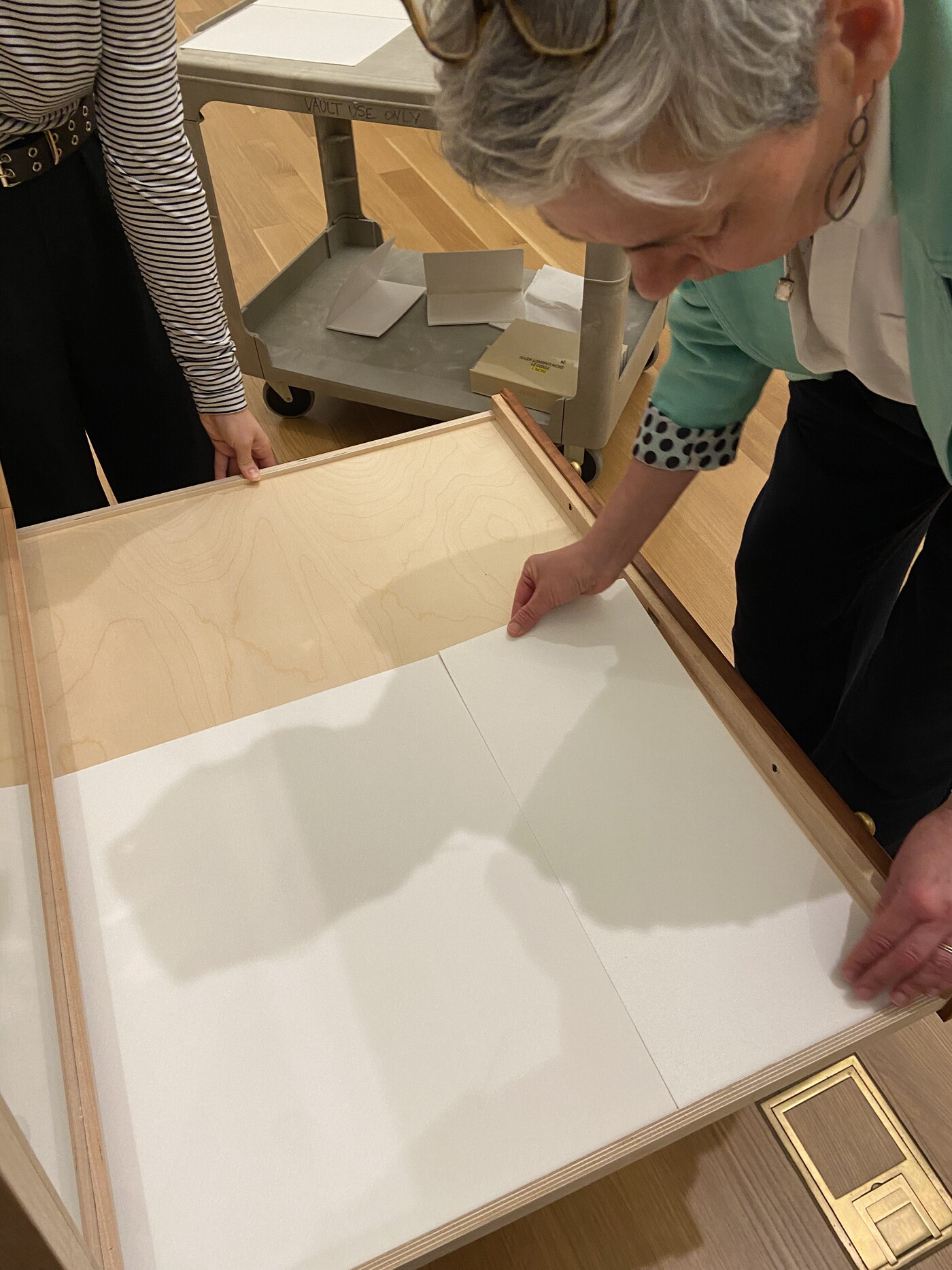
Jodie places absorbent material to regulate relative humidity levels inside the drawer.
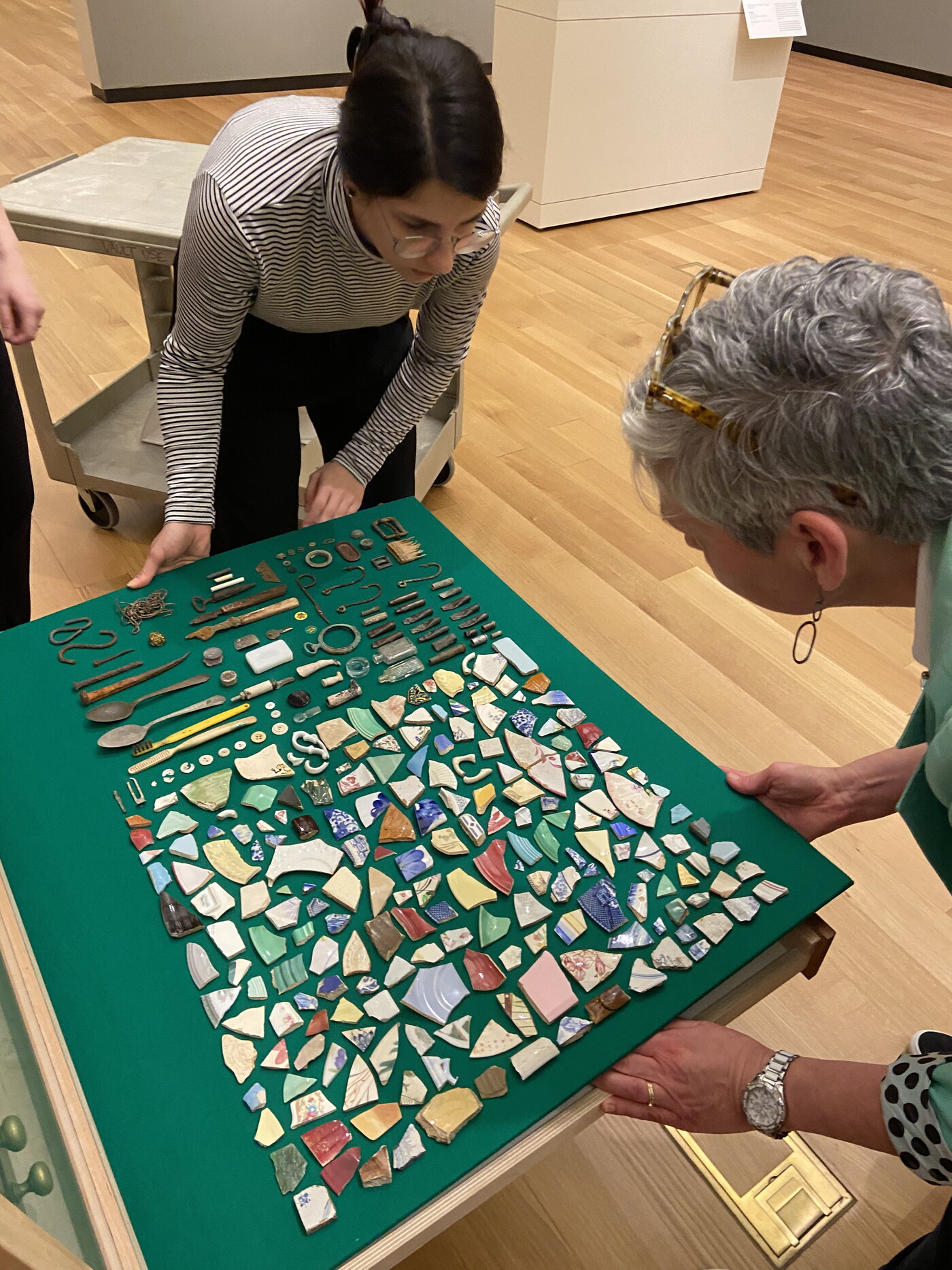
Cristina and Jodie reinstall the artwork inside the drawer.
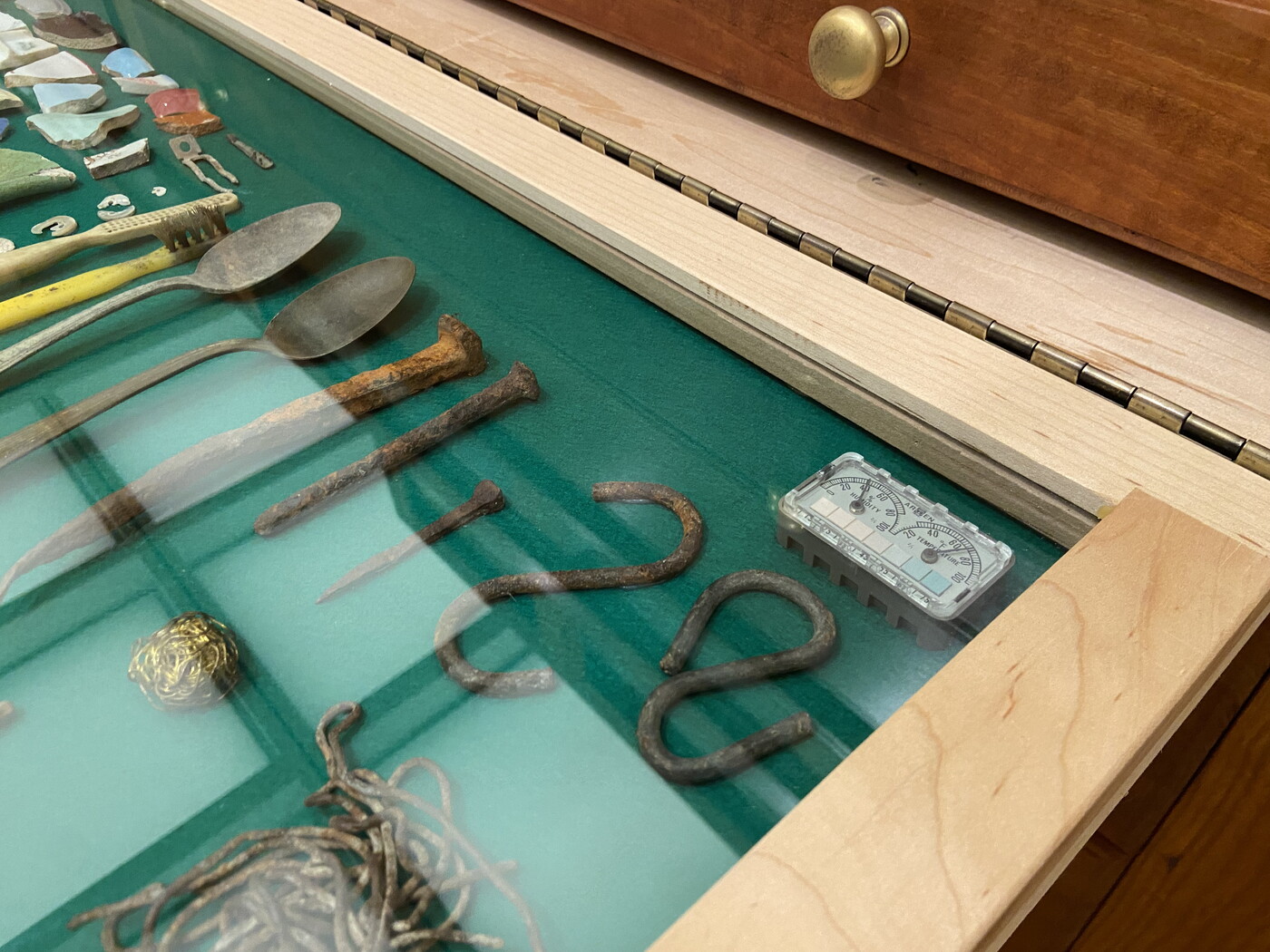
The data logger recording temperature and relative humidity inside the drawer.
This project illustrates how conservation combines observation, science, and solutions tailored to each individual artwork. By caring for these objects, the conservation team at the Carter preserves not only materials but also the stories, questions, and connections that artists like Mark Dion invite us to explore about the world we inhabit.
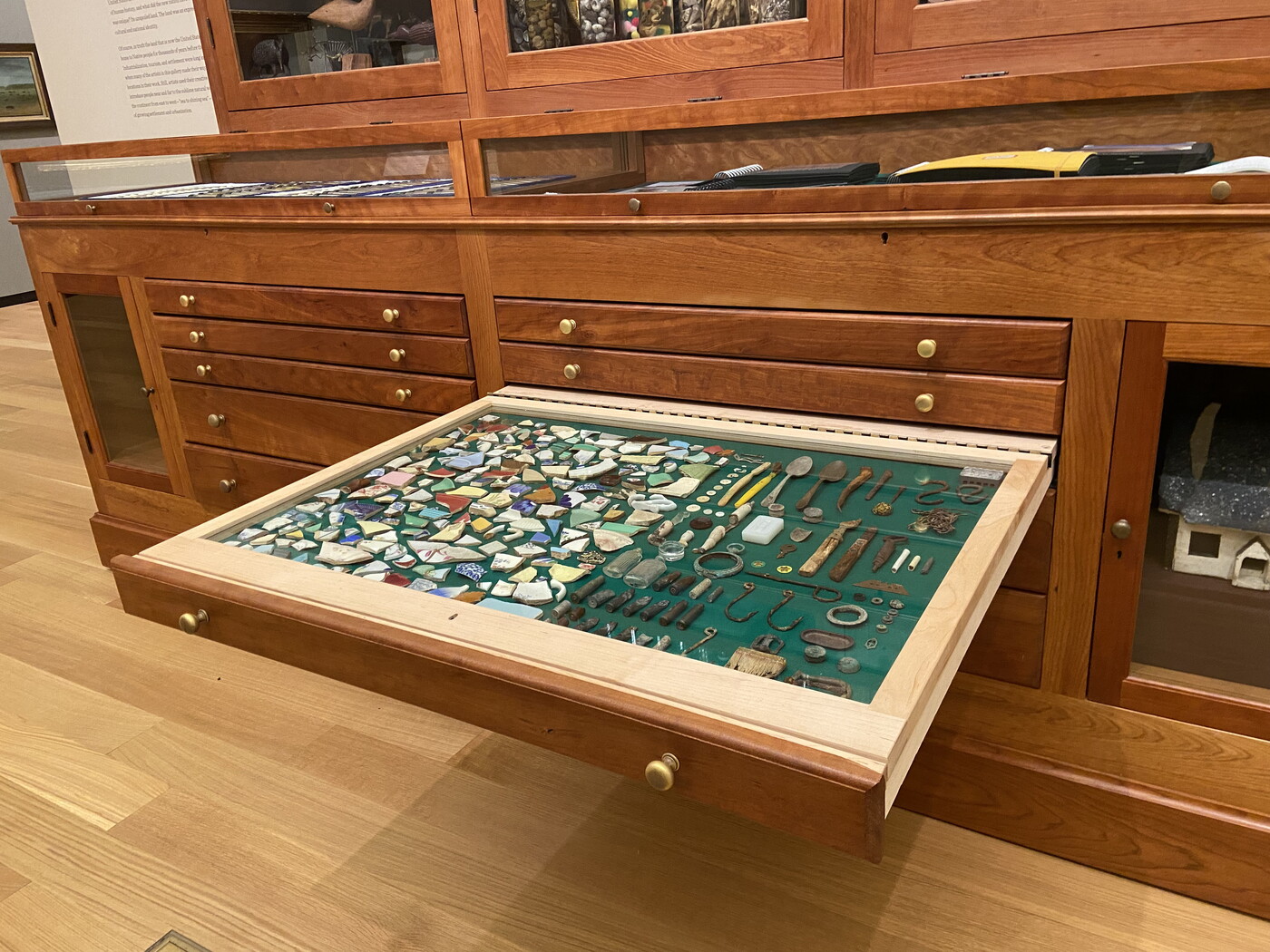
A final view of the drawer following conservation treatment.
Today, the drawer is back in The Texas Cabinet, and visitors can see it in the Museum galleries. We invite you to pause, look closely at the diversity of objects it contains, and consider the visible and invisible stories that coexist within it. Behind each drawer is not only a collection of findings, but also the conservation work that allows these pieces to continue sharing their stories with the public.