The Carter Blog
Carter ARTicles
As seen on the small screen: Roesen and the Ingalls family
Nov 11, 2026
You know the friends and family members who make you pause a movie to discuss a fun fact about a certain prop, character, or historical event? Well, I’m one of them. Recently, this occurred when I settled in to watch the new adaptation of the Little House on the Prairie series on Netflix. From the beginning, I was met with scenes of family, community, and life on the American frontier—themes that are also common in the Carter’s collection. In the beginning of Episode 4 something familiar caught my attention. Much to the dismay of my father, who was watching with me, I replayed the scene, slowing it down and hitting pause. On the back wall of Ma’s family home hung a painting by Severin Roesen, a renowned 19th-century still-life artist whose work is among my personal favorites in our collection.
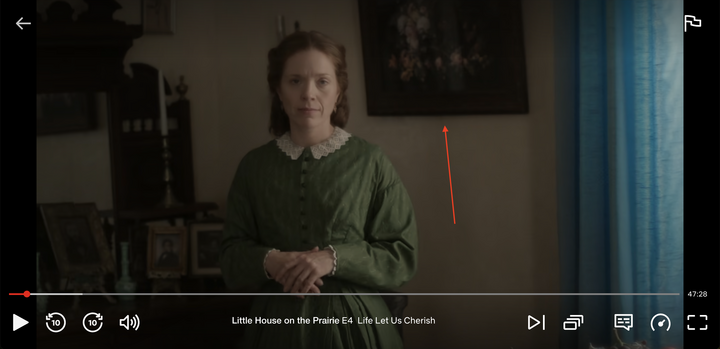
A red arrow points to the Severin Roesen painting in the background of this screenshot from Little House on the Prairie (2026) on Netflix.
While the Roesen painting included in the television show is different than the Carter’s painting, it nevertheless bears a striking resemblance. There is an explanation for that. Those familiar with Severin Roesen will recognize the repetition of symbols in his paintings: elaborate displays of everyday items like flowers, fruit, and other natural-world motifs. The repeated imagery not only saved time and sped up production, but it formed a signature style that created recognition among his clients, such as prosperous German American lumber merchants and families in the town of Williamsport, Pennsylvania. His recognition increased through the American Art-Union, a subscription-based art organization that sold Roesen’s work. His paintings became a status symbol of sorts that conveyed an idea of a new type of burgeoning wealth in the mid-19th century, and they became sought-after for newly-built homes, taverns, restaurants, and hotels.
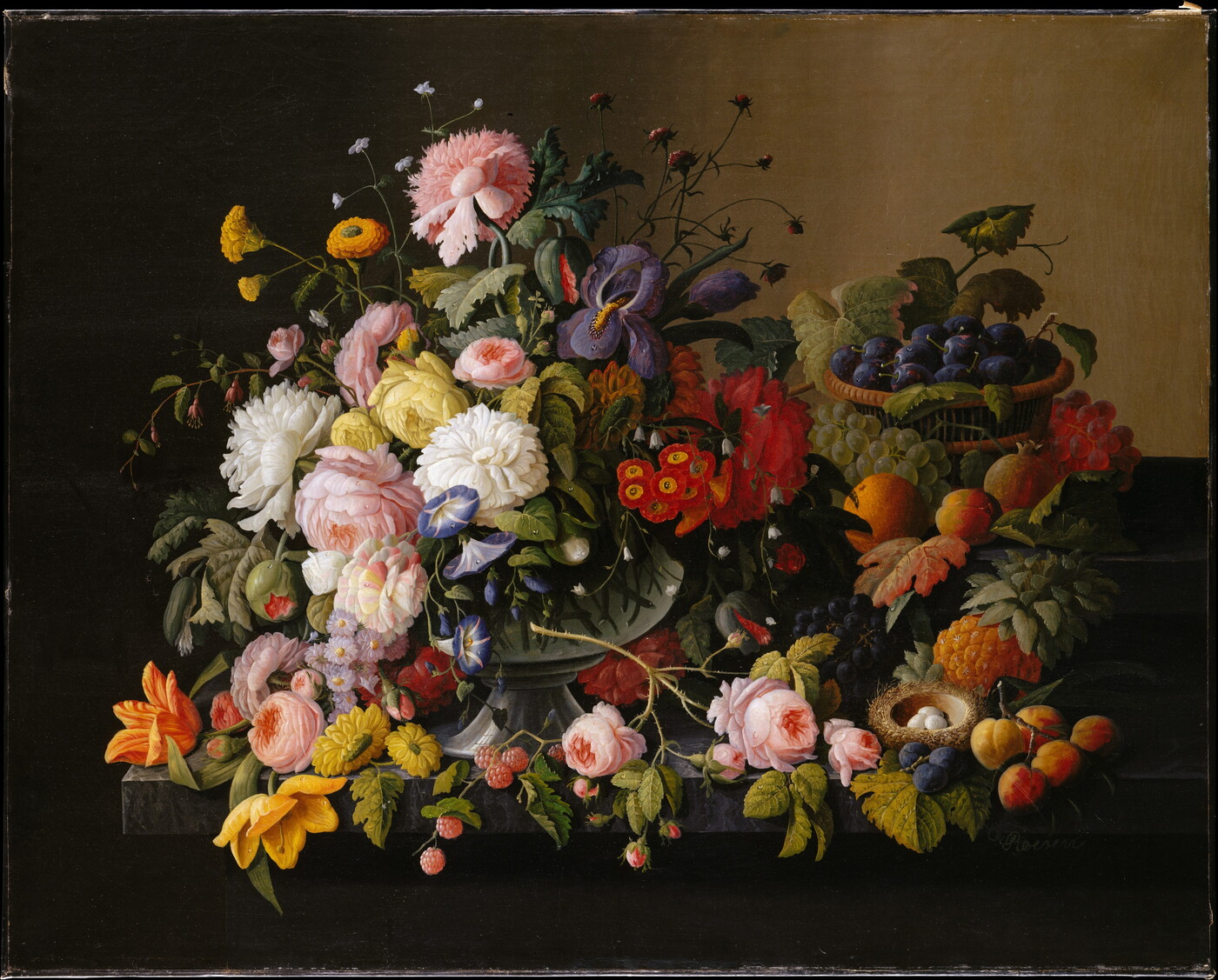
Severin Roesen (1816–72?), Still Life: Flowers and Fruit, 1850–55, Oil on canvas, Purchase, Bequest of Charles Allen Munn, by exchange, Fosburgh Fund Inc. and Mr. and Mrs. J. William Middendorf II Gifts, and Henry G. Keasbey Bequest, 1967, Metropolitan Museum of Art, N.Y., 67.111
The Roesen painting in the Carter’s collection shows this familiar repetition of fruits and flowers, yet it also holds a distinct attribute: the landscape in the background. Roesen, like other still-life artists, often chose to highlight his subject matter with a monotone or plain dark background, letting the fruit and flowers be the focal point of the image. Only a few of his paintings, like the Carter’s, feature a landscape view in the background.

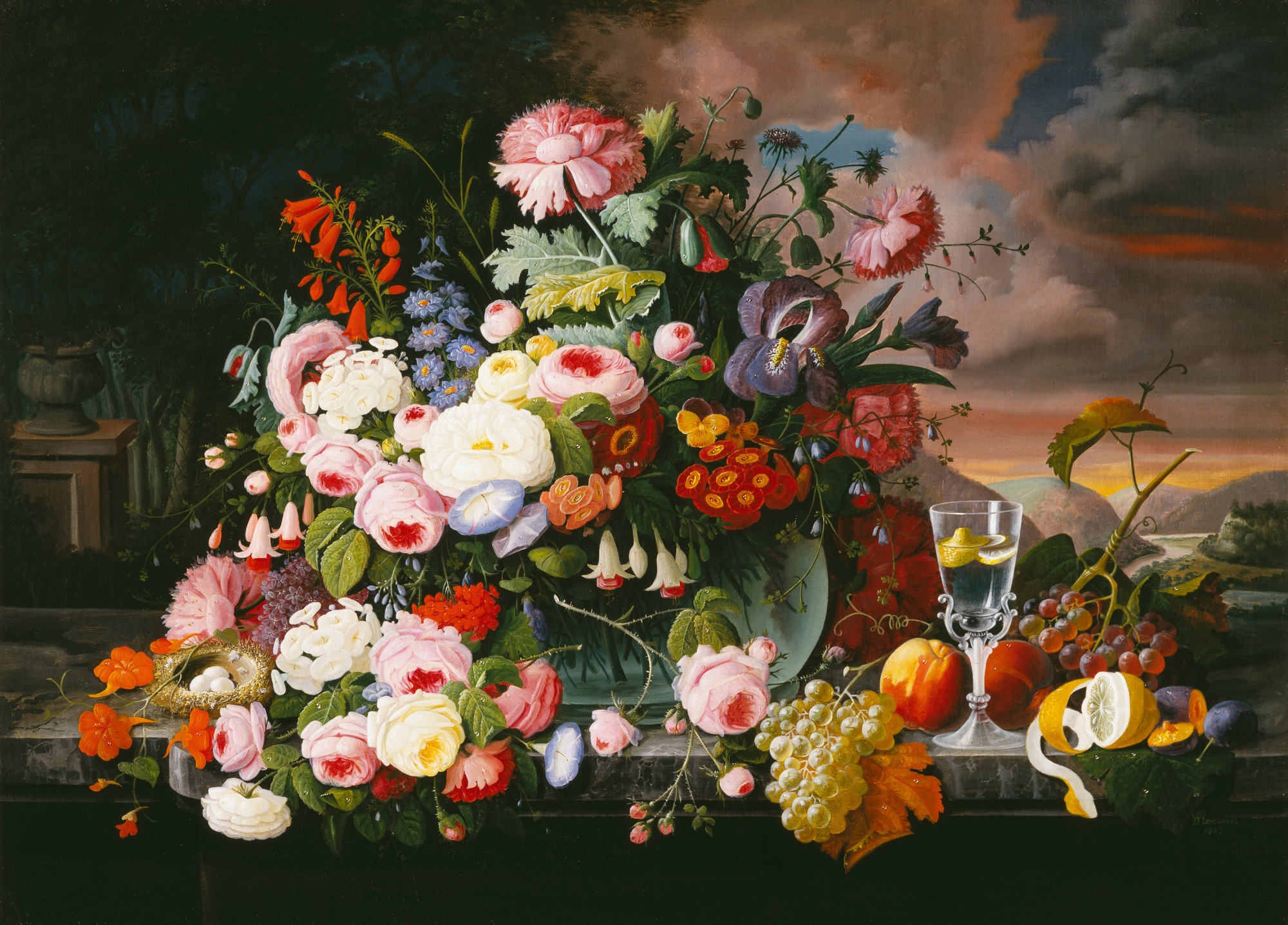
Returning to Little House on the Prairie, why would a floral painting by a German artist appear in a television show about life on the American prairie? Landscape paintings that showed an idyllic life in nature and on the frontier emerged as a popular art theme and tactic to lure people west. Opulent and detailed still-life paintings—especially Roesen’s—surged in popularity among both high and middle-class families, like Ma’s family in the 2026 version of the show. The painting’s inclusion in the set design was a historically informed choice by the show’s art department, reflecting the cultural tastes of the period.
On the surface, a German immigrant artist and an American family on the prairie may have little in common, but they share an experience that remains just as relevant today: migration. Roesen left his homeland of Germany as revolutions erupted in 1848 and immigrated to New York. He later settled in Williamsport, Pennylvania, around 1863. The real Ingalls family that inspired the novels, the 1970s and 2026 television shows, as well as movies, migrated across the American frontier and settled in various towns. For both Roesen and the Ingalls family, migration offered opportunities for a better life and greater economic prosperity. As the United States saw growth in migration in the 19th century, not just through the frontier but from overseas, it also saw territorial expansion through the Homestead Acts, industrialization, displacement, and a shift in art and culture.
In the scene that features the Roesen, Ma is in a dream state, transported back to her sister's home in Wisconsin, where the walls are painted and family photographs, along with artwork, are used as decorations. Her sister tries to sway Ma to come back to comfort and familiarity, instead of staying with her own family in a new town surrounded by harsh environments, with worries about money, food, and other necessities. The inclusion of an artwork by Severen Roesen in a television show about life on the American frontier shows the different ways people lived, worked, and socialized in the 19th century and how material objects could convey feelings of comfort, wealth, and home.