The Carter Blog
Carter ARTicles
Organizing a family history: the John Frederick Kensett Family Papers
May 06, 2026
There’s something uniquely special about being one of the first people to dig into and organize an archive. Going through the range of materials in a collection provides an interesting look into the identity of a person, family, or group. For me, going through the family papers of John Frederick Kensett allowed me to learn more about Kensett the artist, his family, and the work that goes into documenting an artist’s legacy.
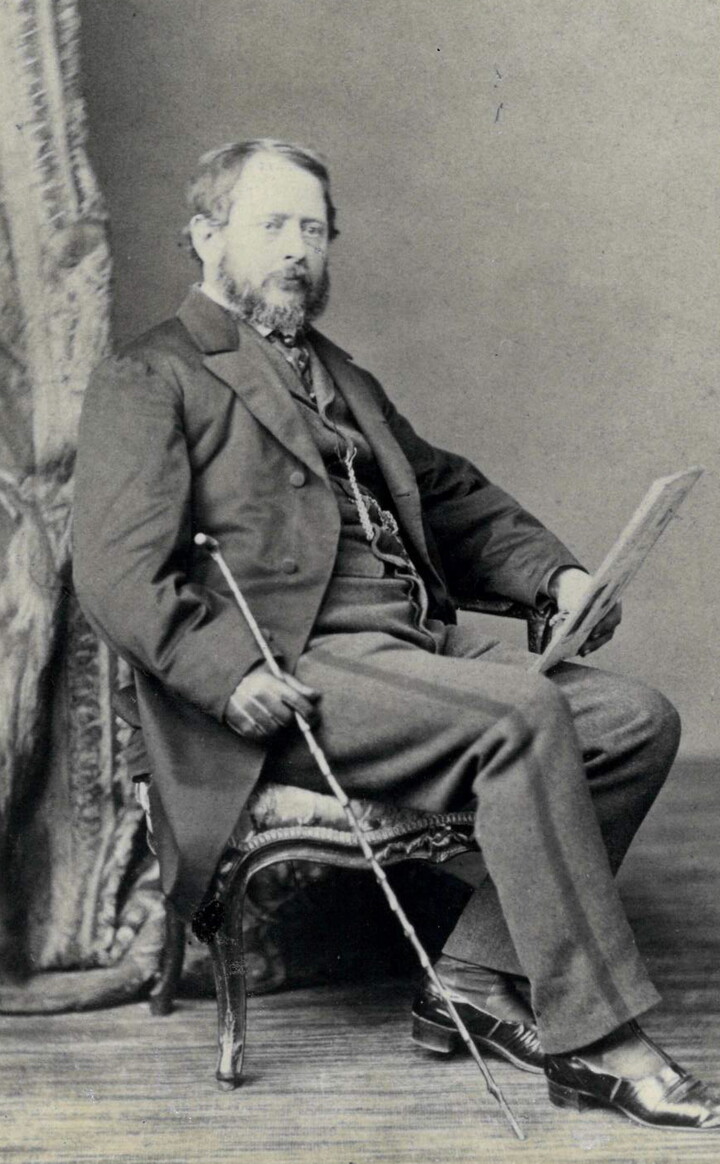
Kellogg Collection of John Frederick Kensett Family Papers, John Frederick Kensett photograph, Amon Carter Museum of American Art Archives.
Kensett was born March 22, 1816, and originally went into engraving, receiving his training from his father and uncle. Through connections made with other engravers and artists throughout his early life, Kensett traveled to Europe to study painting with the goal of becoming a landscape painter. He spent the next several years traveling across Europe and began sending his early paintings back to New York for exhibitions. After he returned to the States in late 1847, Kensett became a staple of the local art scene, which is documented through the materials in the archives.
Letters with various artists (including Thomas Cole and Benjamin Champney), a petition for the establishment of the Metropolitan Museum of Art, the cash book for the Fellowship fund at the National Academy of Design, and other materials in the family archive show how involved Kensett was in the art world of his time. Also highlighting Kensett’s influence is the vast number of materials from Robert Olyphant, a close friend and patron of Kensett who helped organize a memorial album and exhibition following Kensett’s death in 1872.
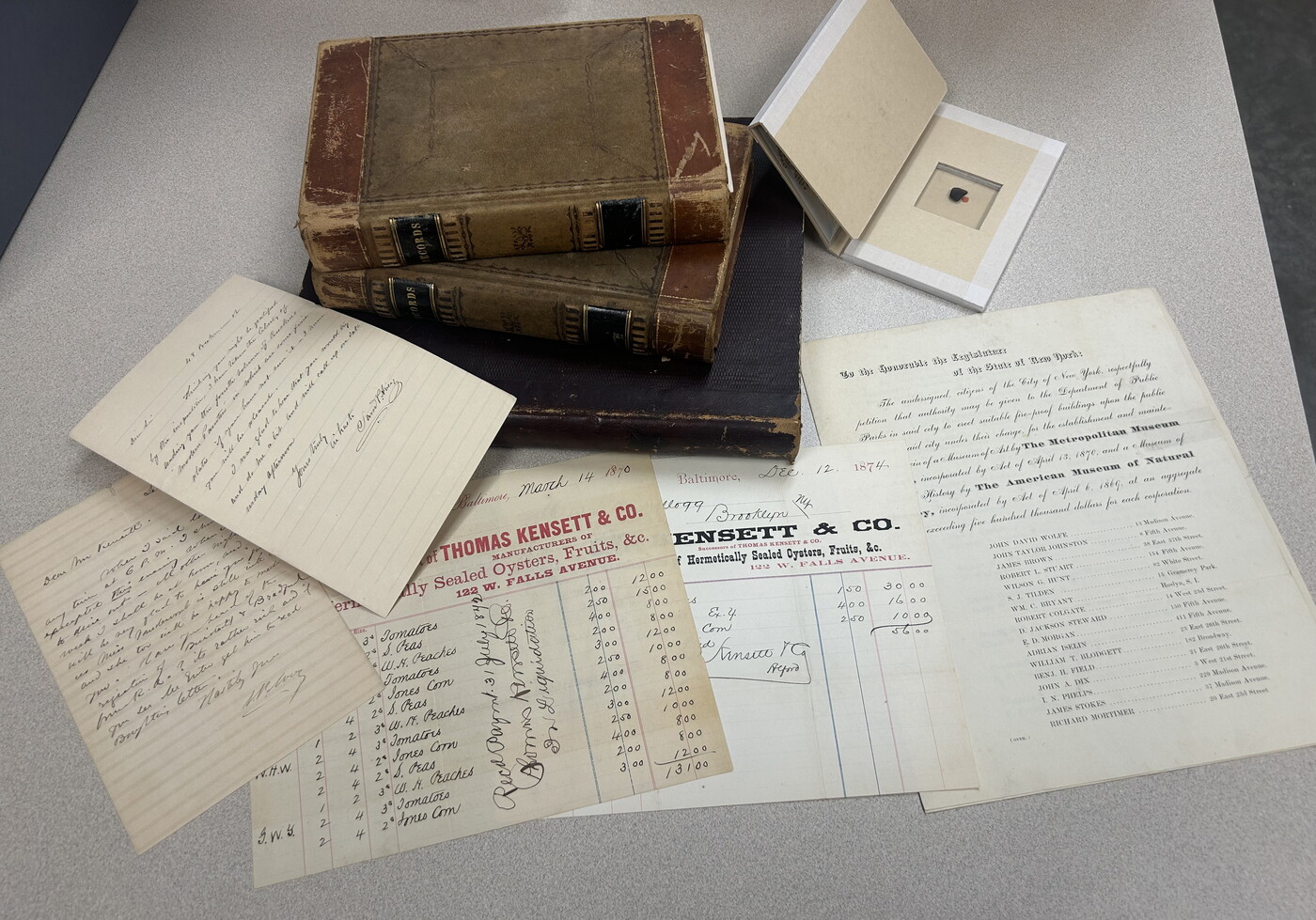
Kellogg Collection of John Frederick Kensett Family Papers, archival materials, Amon Carter Museum of American Art Archives.
In addition to what we learn about Kensett as an artist and the local art scene through the family archive, there is also information to be found about the family dynamics and other family businesses. Along with engraving, which paved the way for Kensett to becoming an artist, his father Thomas was also one of the leading names in the American canning industry. Through a handful of materials in the collection, we find early records from an industry that have become a regular part of our lives today.
Processing an archival collection can easily be one of the most interesting and difficult parts of being an archivist. It can lead down all sorts of rabbit holes that show so much about the people who created the collection, their lives, and the world they lived in. Grouping these moments and elements of their lives into easy-to-understand categories is a challenge that can help us understand a person that much better. This also gives us the opportunity to share this information with everyone from school groups to casual researchers through exhibitions and visits to the archives.