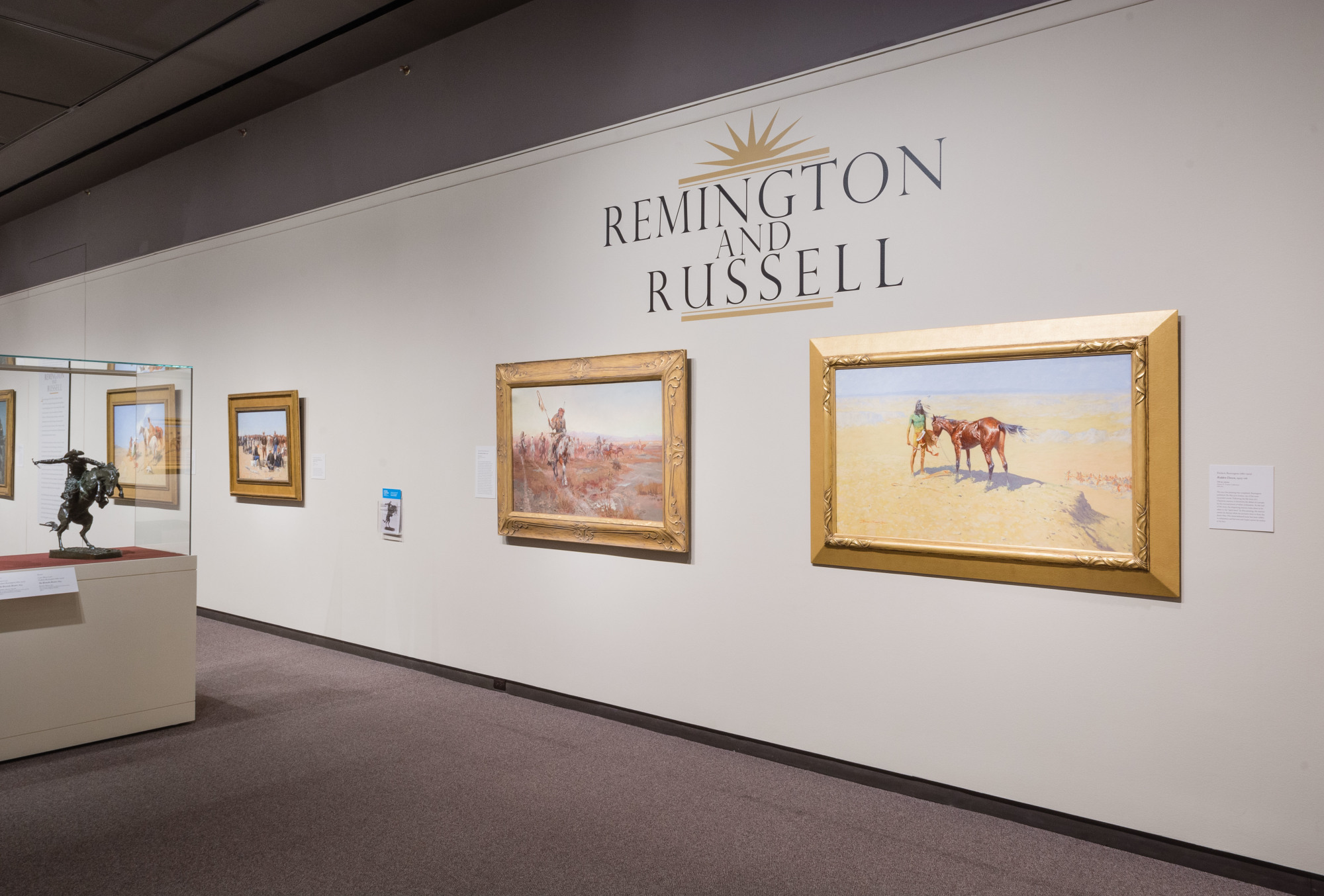
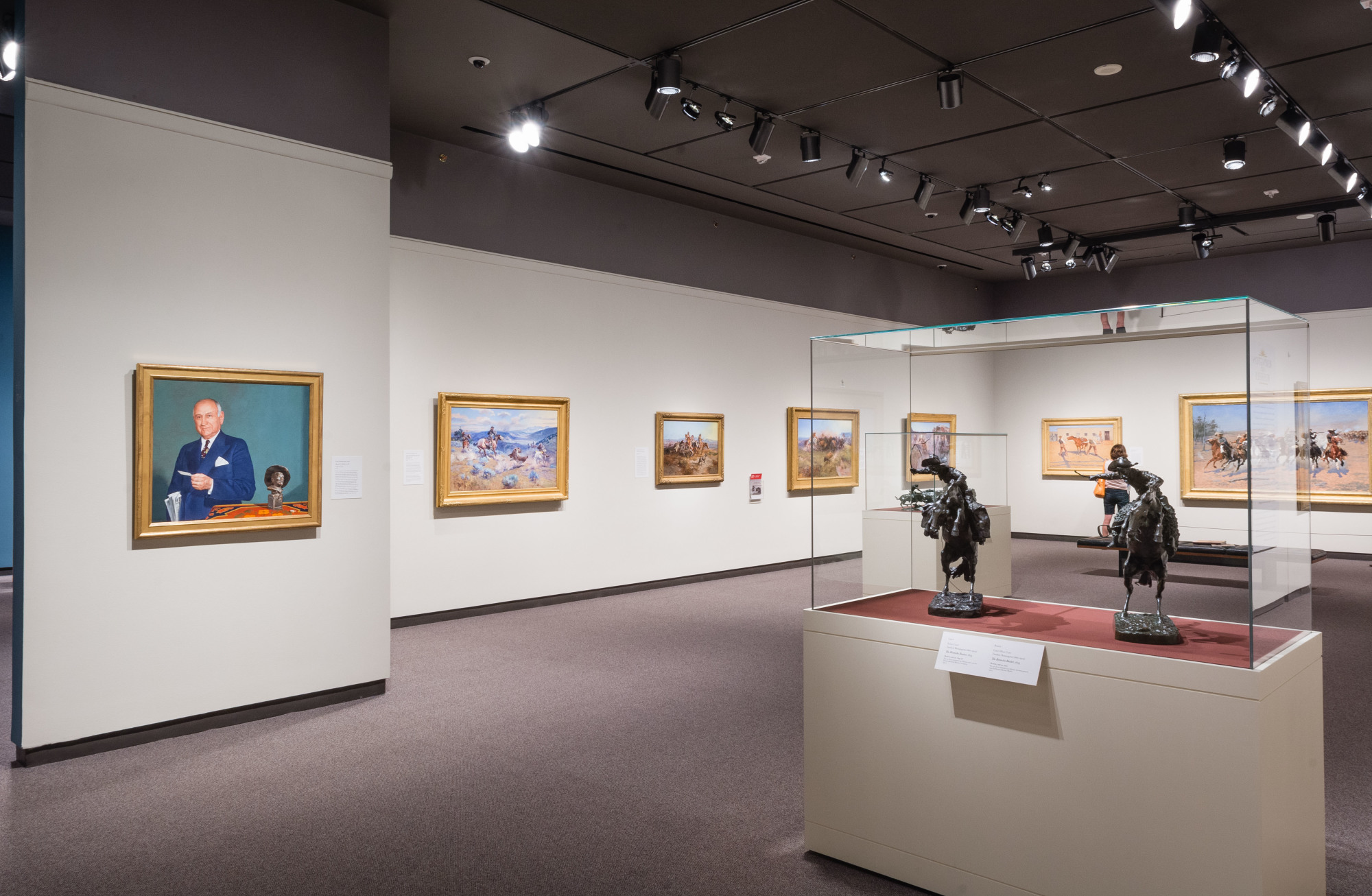
Remington
and
Russell
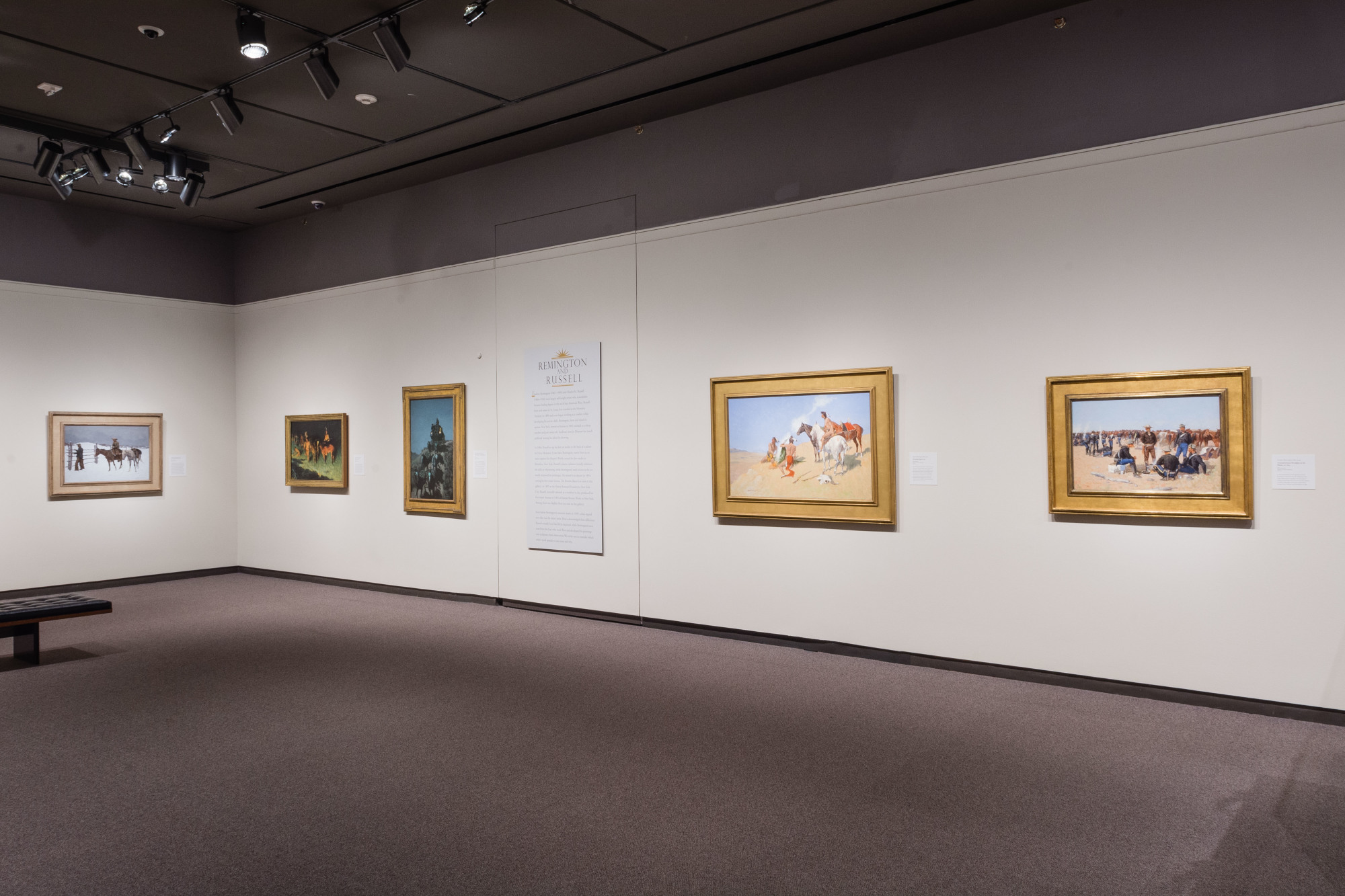
Although they were contemporaries, Frederic Remington (1861–1909) and Charles M. Russell (1864–1926) could hardly have been more different. This focused exhibition of paintings and sculptures selected from the Carter’s extensive collection offers visitors an opportunity to gain insight into dissimilarities between the two artists. Remington and Russell followed their own unique paths to become the greatest practitioners of the art of the American West. Yet, regardless of their differences, they not only manifested the Western Myth, they were largely responsible for creating it.
Exhibition Highlights
Slide Controls
Slides
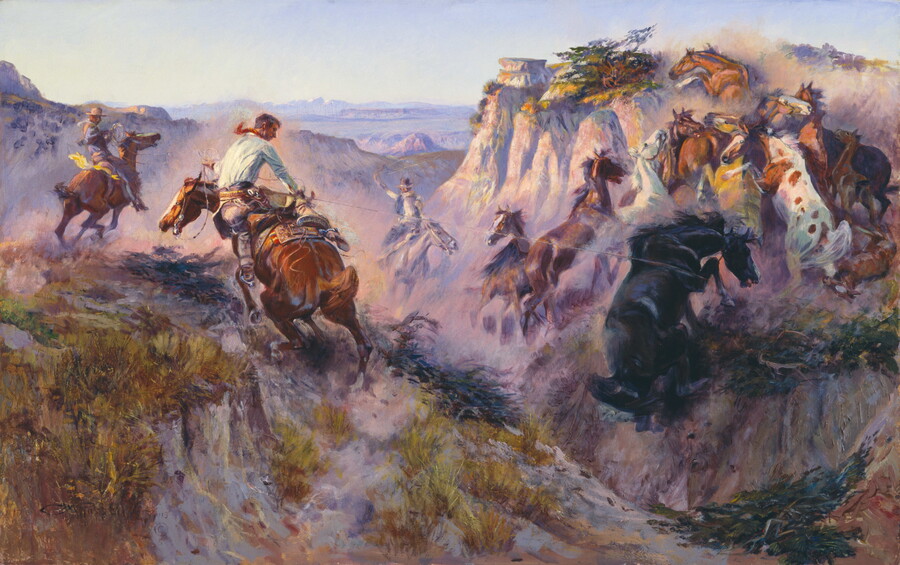
Charles M. Russell
Wild Horse Hunters, 1913Oil on canvas
1961.209

Frederic Remington
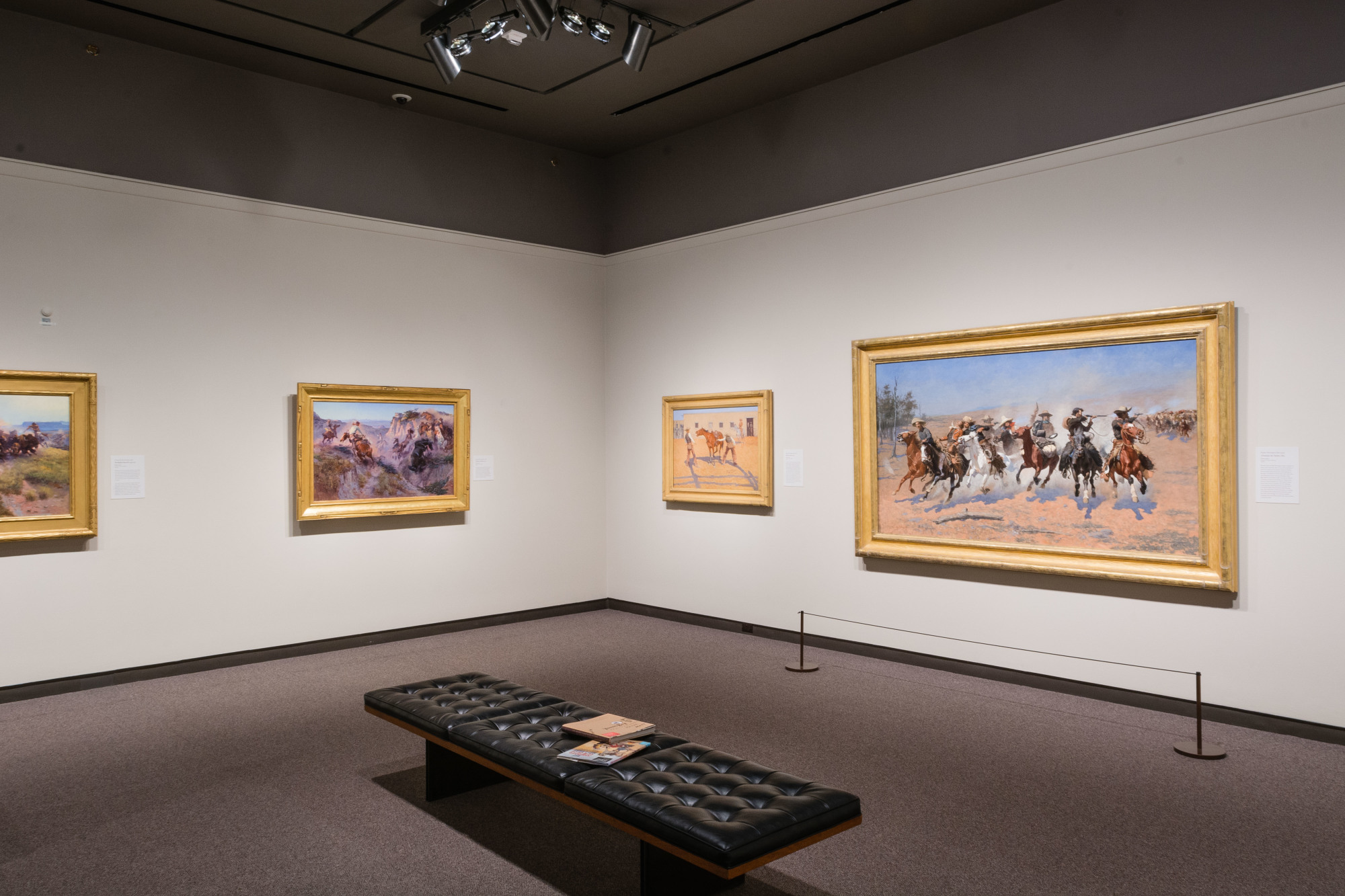
A Dash for the Timber, 1889Oil on canvas
1961.381


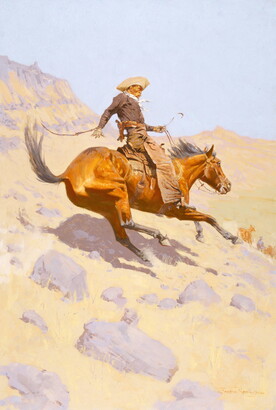
Frederic Remington
The Cowboy, 1902Oil on canvas
1961.382

Charles M. Russell
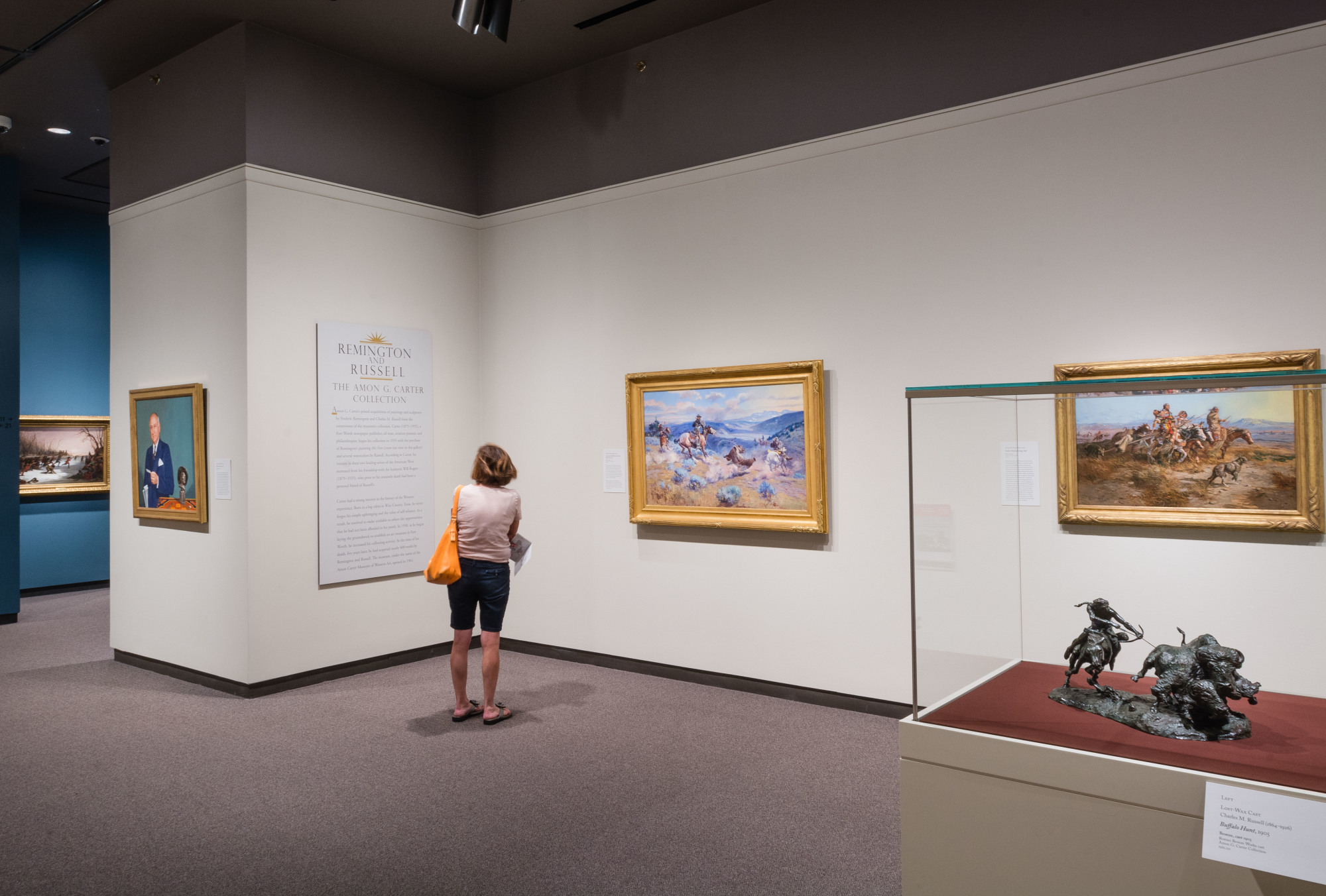
Buffalo Hunt, 1905Bronze
1961.395

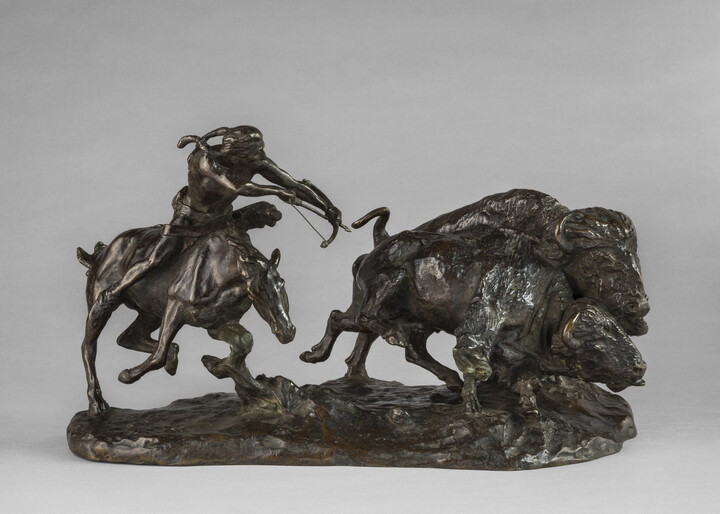
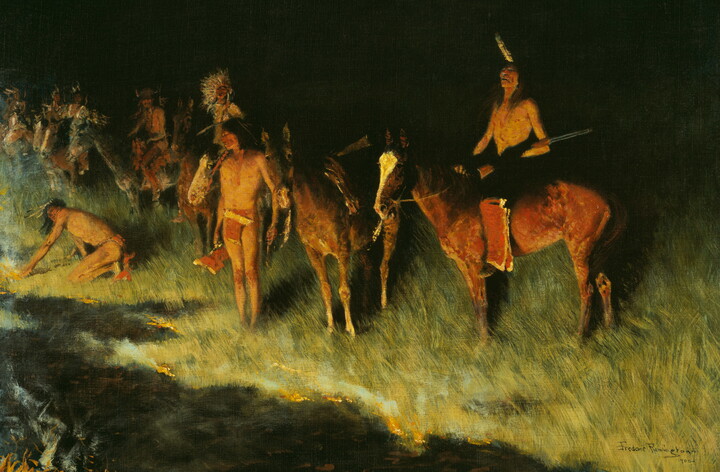
Frederic Remington
The Grass Fire, 1908Oil on canvas
1961.228

Charles M. Russell
The Buffalo Hunt [No. 39], 1919Oil on canvas
1961.146


Explore the lives of Frederic Remington and Charles Russell on their timelines.
Installation Photos
Click a button below to open in gallery. Activating any of the below buttons shows the installation photos gallery