|

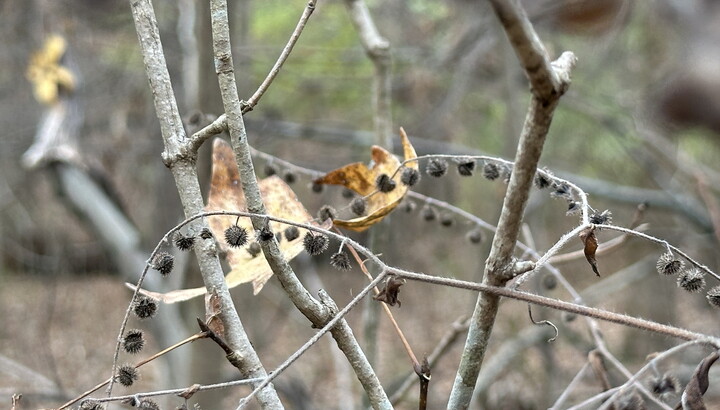
Eliot Furness Porter was born in 1901 in the Chicago suburb of Winnetka, Illinois,
the second of five children in an upper-middle-class family. His father, an
amateur architect and natural history enthusiast, managed the family’s
Chicago real estate and infused in his children a love of learning and the sciences.
His mother, a Bryn Mawr graduate, shared her active support for liberal social
causes. Given his first camera in 1911, Porter immediately challenged himself
to photograph birds, first around his Winnetka home and then at the family’s
summer retreat, Great Spruce Head Island, in Penobscot Bay, Maine. Sent East
for high school, he followed family tradition by enrolling at Harvard, graduating
with a Bachelor of Science degree in chemical engineering in 1923 and a medical
degree in 1929.
Initially,
Porter took up a career as a biochemical researcher at Harvard. But he could
never quite let go of his love of photography. Spurred by support from his brother,
the realist painter Fairfield Porter, and introductions in the mid-1930s to
the acclaimed artist-photographers Alfred Stieglitz and Ansel Adams, he found
himself increasingly photographing the northern New England landscape. In 1938
Stieglitz offered to exhibit some of these black-and-white photographs, along
with several images that Porter made on an excursion to Austria, at his important
New York City gallery, An American Place. That one-person show signaled Porter
as a leading artist, on a par with such respected photographers as Paul Strand,
Adams, and Stieglitz himself. It induced Porter to quit his medical career and
take up photography full-time. But rather than continue to work in black and
white, Porter almost immediately took up color to create more accurate photographs
of birds. Soon he added other woodland subjects to his repertoire and became
the first established artist-photographer to commit to exploring the colorful
beauty and diversity of the natural world.
Over much of Porter’s career, black-and-white photography continued to
set the artistic standard, and he had to fight his colleagues’ prejudices
against the medium. But in 1962 he gained a major boost when the Sierra Club
published "In Wildness Is the Preservation of the World."
That immensely popular book, combining his evocative color photographs of New
England woods with excerpts from the writings of Henry David Thoreau, revolutionized
photographic book publishing by setting new standards for design and printing
and proving the commercial viability of fine art photography books. Its success
set Porter on a lifelong path of creating similar photographic portraits of
a wide variety of ecologically significant places the world over.
Building on the success of "In Wildness" and subsequent photographic celebrations of
Glen Canyon (in Utah),
Maine, and the
Adirondacks, Porter moved increasingly
farther afield to photograph and complete books heralding more distant and unusual sites.
Such places included Baja California, Mexico,
the Galápagos,
East Africa, and
Antarctica, all of which drew his attention
because of their ecological diversity and the environmental stresses they faced. In the late 1960s, he added
cultural topics to his agenda, eventually completing photographic studies of
classical Greek sites,
ruins of ancient Egypt,
and modern China. All told, the
artist published twenty-five books and was working on several more when he died
in 1990.
Porter never gave up his passion for birds, continuing to photograph them almost every
spring until failing health in the 1980s prevented that often strenuous work. He always
remained fascinated by the scientific and ecological underpinnings of his subjects, be they
animal, plant, or mineral. In the 1950s he would at times set himself such tasks as
photographing new-born spiders or the life cycle of a mosquito. Lichen was one of his
favorite subjects; he sought it out wherever he traveled. The publication of James
Gleick’s book Chaos: Making a New Science (1987) led him to review his life’s work
in recognition of his own implicit illustration of Gleick’s influential theory.
But Porter’s fascination with nature’s workings and strong environmentalist
ethic never superceded his passion for art. Throughout his life, he remained
committed to making and exhibiting meticulously rendered
dye transfer color prints of his photographs. In the 1940s and 1950s, when lines between art and
natural history museums were more fluid, he was just as likely to show at the
American Museum of Natural History as the Museum of Modern Art. Art museums’
gradual acceptance of color in the 1960s and 1970s led to a regular stream of
monographic exhibitions at both large and small venues. Highlights include Intimate
Landscapes (1980), the first one-person show of color photographs presented
by the Metropolitan Museum of Art, and major retrospectives sponsored by the
Art Museum of the University of New Mexico (1973) and the Amon Carter Museum,
Fort Worth, Texas (1987 and 2002).
Married twice, Porter fathered five sons. In 1946 he established his permanent
home in Tesuque, just outside of Santa Fe. It was there that he made his prints
and assembled his books. Visit Porter's Books and Portfolio
in this section for a comprehensive list of his books and portfolios.
|